
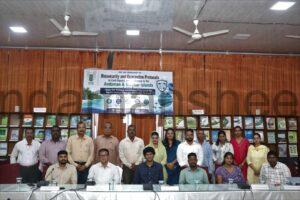
Sri Vijaya Puram, Aug 11: The Division of Fisheries Science, ICAR–Central Island Agricultural Research Institute (ICAR-CIARI), Sri Vijaya Puram, organised a one-day workshop on “Biosecurity and Quarantine Protocols to Curb Aquatic Animal Diseases in the Andaman & Nicobar Islands” under the National Surveillance Programme for Aquatic Animal Diseases (NSPAAD) Phase-II project on August 10, 2026. The programme was conducted by the Division of Fisheries Science, ICAR-CIARI, under the NSPAAD Phase-II project under the chairmanship of the Director, ICAR-CIARI, with the objective of creating awareness and strengthening the capacity of fisheries stakeholders on aquatic animal health, disease prevention, farm biosecurity, quarantine and disease surveillance. Dr. Muruganandam, Head, Division of Fisheries Science, served as the Convener, while Dr. J. Praveenraj, Scientist, served as the Course Director. Dr. R. Kiruba Sankar, Dr. Jess Maria Wilson and Mr. Chittaranjan Raul served as the Course Coordinators. The workshop brought together a diverse group of stakeholders, including officials and field personnel of the Department of Fisheries, shrimp farmers, aquarium and ornamental fish traders, cage-culture operators and other fisheries stakeholders. The participation of stakeholders from different sectors provided a platform for discussing practical challenges in maintaining aquatic animal health and preventing the introduction and spread of diseases in the Islands. The workshop emphasised that the island ecosystem is particularly vulnerable to the introduction of exotic pathogens through the movement of live fish, shrimp seed and other aquatic animals. Participants were therefore sensitised on the importance of obtaining healthy stocks from reliable sources, maintaining appropriate quarantine facilities and conducting health screening before introducing new stocks into existing culture systems. Technical sessions covered important aspects of farm-level biosecurity, quarantine procedures, disease identification, health screening of newly introduced stocks, disinfection and sanitation, safe transportation of aquatic animals, water-quality management, early detection of disease symptoms and timely reporting of suspected disease outbreaks. Special attention was given to biosecurity measures applicable to shrimp farming, ornamental fish trade and cage culture, including prevention of cross-contamination, equipment and facility disinfection, controlling movement of personnel and equipment, proper disposal of dead or diseased animals and regular monitoring of feeding behaviour and mortality. The programme forms part of the continuing efforts of ICAR-CIARI under NSPAAD Phase-II project to strengthen aquatic animal disease surveillance, diagnostic capacity and stakeholder awareness in the Andaman & Nicobar Islands.


