
Port Blair, June 08: Traditional knowledge on medicinal plants and their use by the indigenous healers has been instrumental in the present drug development. Medicinal plants still play a crucial role in the health care system of our Islands. Interestingly, the use of medicinal plants as a disease preventive measure have acquired greater impetus in the veterinary field since last few decades due to scare of drug residues in the livestock products and development of drug resistance. Hence, importance on herbal treatment and immune boosters has been drastically increased. Therefore, exploration and investigation of medicinal plants is ever increasing in the veterinary field. The exploratory studies both in vitro and in vivo are being carried out at ICAR-CIARI to assess the immunomodulatory potentiality of medicinal plants in livestock and poultry. The results are encouraging. In poultry, brooding stage after hatching for a period of 4 weeks is very much critical. During this time, antibiotics are by default used by the farmers and initial vaccinations against Ranikhet disease and Infectious bursal disease are completed. Either water or feed supplements are needed during brooding period to enhance growth and reduce chick mortality. Vaccination cannot be compromised with any supplements to prevent the outbreak of viral diseases in poultry. Viral diseases could be controlled through vaccination only. Broilers are usually vaccinated. Rural poultry including vanaraja and desi birds should also be vaccinated to prevent the acute mortality. However vaccination does not confer 100% immunity in all cases. There is a need to search for alternative measures to boost up the immunity acquired through vaccination. Medicinal plants are considered as a complementary means to control this virus, because they have been implicated in treatments for a variety of infectious and non-infectious diseases. Alkaloids, flavonoids, saponins and tannins found in plants have been regarded as novel antiviral agents. Therefore, herbal supplements helping to promote bird immune systems cause successful vaccination outcomes.
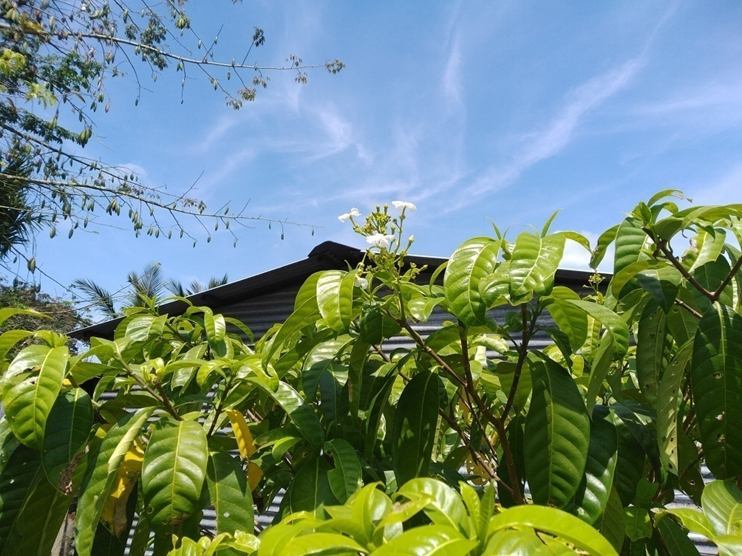
Nicobarese of A&N Islands is rich in resource for the medicinal plants which are widely used by tribal farming community. One of such commonly found medicinal plants among nicobari tribes is Tabernaemontana crispa Roxb belonging to Apocynaceae family. Nicobarese generally called it as“Kȍlitengënch/ Tőkurō tông”. Milk wood trees (Tabernaemontana crispa) is a flowering plant having pan-tropical distribution and has proven record of medicinal effect in human. This plant had wide applications for various ailments such as blood vomiting, Body ache, Diarrhea, Dysuria, Fever, bone fracture, Head ache, Hypertension, Jaundice, Menstrual disorder, Pain in the eye, Groin pain, Scrotal pain, Abdominal pain, Dental caries, Vomiting, Wounds, Skin injuries and joint pain. The leaves of this plant have high content of alkaloids and carotenoids. The scientific team of Dr.T.Sujatha, Dr.Bhattacharya, Dr.Jai Sunder and Dr.A.K.De has standardized the herbal composition using Tabernaemontana crispa through controlled experiments under the guidance of Dr.E.B.Chakurkar, Director, ICAR-CIARI. The leaves can be used either fresh or dried form. The decoction of dried leaves of Tabernaemontana crispa can be given as drink during brooding period to keep up the health of immune system of rural poultry and it may be continued throughout the laying cycle. The plant may be given along with other herbs also to have synergistic effect. Herbal decoction has to be prepared with fresh leaves of Tabernamontana crispa, neem leaves, Garlic, ginger and turmeric and given as water supplement. This supplementation increased the vaccination titres against RD vaccination. Hence, the scientific team report that herbal boosters enhances protection titre of vaccination and recommend for supplementation of herbal supplement comprising of Tabernaemontana, neem, garlic, ginger and turmeric to boost up the vaccine effect in rural poultry at field level. Farmers are recommended to supplement these herbs while vaccinating rural poultry to address the issue of vaccination failure at field level by boosting up the vaccination. This practice is not only useful for conservation of cultural tradition and biodiversity of medicinal plants but also for community health care.


