
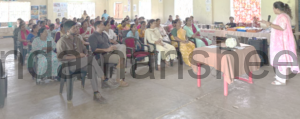
Sri Vijaya Puram, May 10: ANET–Dakshin Foundation, in collaboration with the Chouldari Gram Panchayat, celebrated World Menstrual Hygiene Day through a special community programme for women and girls in Chouldari. The event witnessed enthusiastic participation from nearly 65 women and girls and aimed to promote awareness, open dialogue, and informed choices around menstrual health and hygiene.
The programme began with an engaging ice-breaking activity, Menstruation Bingo, which encouraged participants to interact and share diverse experiences related to menstruation in a comfortable and supportive environment.
Welcoming the participants, Mr. Anand Rao, Programme Officer, Dakshin Foundation, introduced the organisation’s work in the Andaman and Nicobar Islands and highlighted the importance of creating safe spaces for discussions on menstrual health. Ms. Lalita Tigga, Block Development Officer, Ferrargunj, Ms. Tapasi Saha, Pradhan, Chouldari Gram Panchayat and Ms. Pramila Kumari, Zilla Parishad member, Chouldari attended the programme and appreciated the initiative to promote awareness and dialogue around menstrual health.
Participants were then introduced to key concepts of menstrual health and sustainable menstruation through engaging presentations. A special highlight of the event was an expert session by Dr. Ankita Banerjee, a women’s health specialist from Sri Vijaya Puram, who addressed common concerns related to menstrual health and interacted with participants on issues related to menstrual health.
The event featured a range of interactive activities and games, including Make Your Plate, Uterus Puzzle, Segregation Game, and Menstrual Health Ludo, which helped communicate key messages on menstrual health, nutrition, and hygiene in an engaging and accessible manner. The programme also included a demonstration stall showcasing sustainable menstrual products such as menstrual cups, reusable cloth pads, and period underwear. The stall provided participants with an opportunity to learn about environmentally friendly alternatives to disposable sanitary pads and generated considerable interest among those curious about making the transition to more sustainable menstrual practices. In addition, participants had the opportunity to interact one-on-one with Dr. Banerjee to discuss personal health concerns and seek guidance.
Women and girls participated wholeheartedly throughout the event, contributing to open and meaningful conversations around menstrual health, hygiene, and environmentally sustainable menstrual products. The programme underscored the importance of breaking taboos surrounding menstruation and empowering communities with accurate information and access to supportive resources.


