Signature: xpjrtSEolOtairx7XuYuIO5v57Fxkhr4CUk3PzSc62/LwQch41JUCM2BWPMbf8qYEoPTw7YqhFZB+4aTbN1ot72uFHRgzO+kQTgXHgbEx/IpBbVEQCC2WYI1Ef5s+/wW76Fd1MT9kFTkl4/IvtoAbdf5S7+MvkRrDL4s5/3kmlDlBWIn3y1iXdeX3eRwgYCa2mca5jBQW5/UK98E+slrTAmFLtIvULMbdjZoO3wQ1FIlOwzbu78WxpJjnG1yGzYjn3MLUo5bsNjALW8/5WKXdQsXRU3jPToTEhIBWycjP0l2c/Q3msJUF1LzSQr6O2hyE9VQ/rV1aXghABxdtCUHF5jpIwdfs1OCgrfDyqiMFphXIUZhoViu8aGUub6V8ma+MjtdNruRMmSmV/4FT0tlNv9dxGTkvzXihsD7io3Ow8Xm1N3n5j5YKKzDlT3N4mwvvKCFH+n/YsaK4rfxHr7ctCyaYIYY8t+Wxx9/Eh2kuhNzYo/l6KM4/v2dXzV/YQdenOnvBvZ9Lc7/qdLIOVb73MhCiroefVS1Bl7K17f1y6J+I2woLOJx9n4+xVBx9ThdE1vgZSTy7odQ6/vstGXv4PEb8GhyvFDtUxlJFW7mz9YGi4IrCR65vG2IuX5UhBWsGbHT1ejpKLKFLSrqv4uRJsUpCTxvhISuEE+zpkOtGAvSTTIhN9s16nhVL8rWGhEnWM4xsOU2YjQBChpKUCEK8aaw0e5aDbycFj6g4o+GC4bAeiSK/Uwk+xNyA18Kw87zsH0e6jYetREfLrGn48vdiaJMiZCToGbuAdSAZkMVtGv4ycjFm8v5J7bmKndF43i0OevrBmtJw5BoWqiFPvFMs0aOkw1T58RWPt+/Jfdb29UlZp5Z8Os9nBxDWAdwkTqI5XhiZTAXGxdH/FTvU8Dh6UFF04A1zPfIXt+mV7ZHpvocqTFnT1uP2w4pJXV93zk+IM+sZB6PKqJo0ZetU99uzGnyy9grG7VEjP1f9/wf70w=
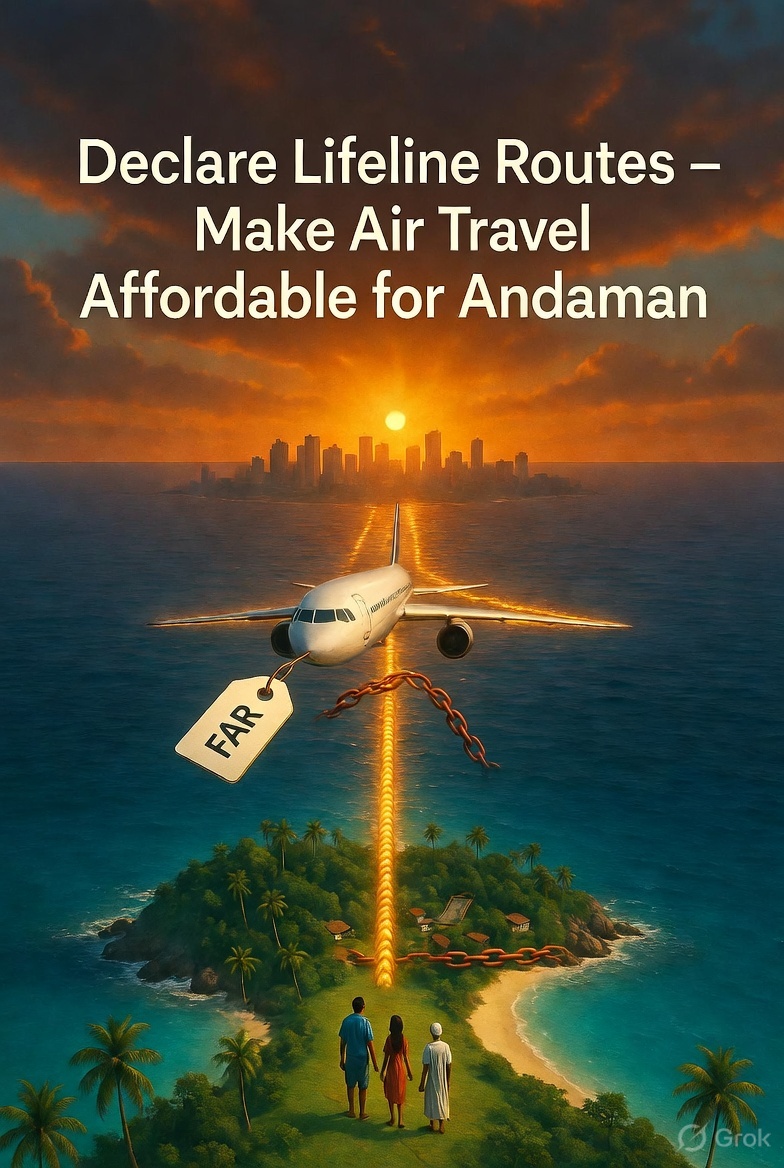
The soaring airfares in the Andaman and Nicobar Islands have steadily transformed from a seasonal concern into a persistent crisis affecting everyday life. For residents of these remote islands, air travel is not a luxury—it is the only viable link to the mainland. Yet, the rising cost of tickets has made this essential service increasingly unaffordable, placing a heavy financial burden on ordinary citizens.
Unlike mainland regions, the islands lack alternative modes of transport such as railways or road connectivity. This unique geographical isolation makes aviation the sole lifeline for purposes ranging from education and employment to critical medical care. When the cost of a one-way journey climbs to levels comparable to—or even higher than—international travel, it raises serious questions about accessibility and equity. For many families, the choice is no longer about convenience, but about whether they can afford to travel at all.
The issue is often explained as a consequence of market-driven pricing. Airlines operate within a framework where demand and supply dictate fares, with limited direct intervention from the government. While this may hold true in a general context, the Andaman and Nicobar Islands cannot be treated as just another market. The dependence here is absolute, and the stakes are far higher. A purely market-driven approach, without safeguards, risks excluding a large section of the population from essential mobility.
What is needed is a balanced approach that respects market dynamics while recognizing the region’s unique vulnerabilities. One possible step is to designate key routes connecting the islands to major mainland cities as “lifeline routes.” Such a classification could justify targeted interventions, ensuring that fares remain within a reasonable range. Additionally, the introduction of a trigger mechanism to regulate prices during abnormal spikes could provide much-needed stability.
Equally important is addressing the supply side of the problem. Limited flight frequency directly contributes to higher fares. Increasing the number of flights, especially during peak demand periods, can help ease pressure on prices. At the same time, strengthening maritime connectivity through reliable and timely shipping services could offer a viable alternative, reducing overdependence on air travel.
Infrastructure development also holds promise. Expanding and optimizing facilities such as secondary airports could enhance operational flexibility and encourage greater airline participation. Such measures, combined with innovative policy interventions, can create a more resilient and accessible transport ecosystem.
Ultimately, the question is not whether airfares should be controlled, but how they can be made fair without undermining the viability of service providers. For the people of the Andaman and Nicobar Islands, travel is not optional—it is a necessity tied to their basic rights and opportunities. Ensuring affordable connectivity is therefore not just an economic imperative, but a matter of social justice.


