Sri Vijaya Puram, Nov 02: The A&N Islands are prone to Geological disasters and located in one of the most seismically active parts (Zone –V) of the world and several great earthquakes have occurred in the past. The severe earthquake that occurred on December 26, 2004 caused horizontal and vertical shifts of land mass in the A&N Islands, which caused the loss of lives and property of this UT.
The Directorate of Disaster Management has urged the general public to adhere to Do’s & Don’ts of Earthquake to mitigate the impact of earthquake and save their precious lives.
BEFORE EARTHQUAKE
• Consult a structural engineer to make your house earthquake resilient.
• Fasten shelves securely to walls; place heavy/ large objects on lower shelves. Provide strong support to power and gas appliances
• Prepare an emergency kit with essential items for safety and survival.
• Develop an emergency communication and evacuation plan for your family and community.
• Learn the technique of ‘Duck-Cover-Hold.
Educate yourself and family members about earthquake risk by participating in earthquake safety programmes.
DURING EARTHQUAKE
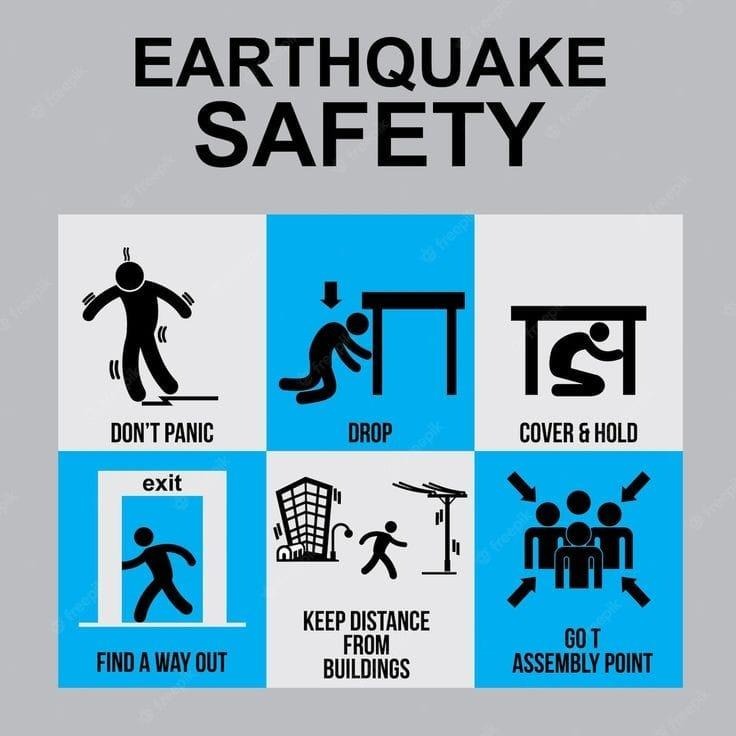
• Stay calm, Do Not Panic. If you’re indoors, stay inside. If you’re outside, stay outside.
• Don’t use matches, candles, or any flame. Broken gas lines and fire don’t mix.
• If you’re in a car, stop the car and stay inside until the earthquake stops.
• Duck under a table; Cover your head with one hand and hold the table till the tremors last.
• Stay away from mirrors and windows. Do not exit the building while the earth is still shaking.
• Move outside as soon as the tremors stop. Do not use a lift.
• When outside, move away from buildings, trees, walls and poles/electric lines.
• When inside a vehicle, pull over in an open place and remain inside, avoid bridges.
AFTER EARTHQUAKE
Do not enter damaged buildings.
If trapped in rubble:
• Do not light a matchstick
• Cover your mouth with a cloth.
• Tap on a pipe or a wall.
• Sound a whistle
• Use stairs and not lifts or elevators.
• Move cautiously, and check for unstable objects and other hazards above and around you. Check yourself for injuries.
• Stay away from beaches. Tsunamis and beaches sometimes hit after the ground has stopped shaking.
• Do not spread and/ or believe in rumours.
Emergency Helpline Numbers: 112 (ERSS), 1070(SEOC), 1077(DEOC), 100 (Police), 101(Fire) & 102 (Ambulance).
“Be aware, Be Prepared, Be Safe”


