
Lucknow/Sri Vijaya Puram, Nov. 6: The Hon’ble Lieutenant Governor of Andaman and Nicobar Islands, former Rajya Sabha MP and former Deputy Chief Minister of Uttar Pradesh, Dr. Dinesh Sharma, said that both Andaman and Lucknow have been symbols of courage, sacrifice and patriotism against British rule. While the Cellular Jail in Andaman narrates the story of the repression, torture and sacrifices of freedom fighters, Lucknow was a major centre of the Revolt of 1857, which gave the British a tough challenge. The flame of freedom that was ignited in 1857 is preserved in the Andaman Jail through the countless sacrifices made for the cause of independence.
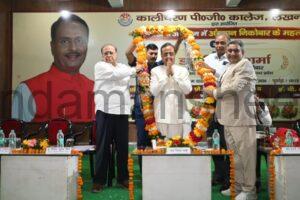
Addressing a seminar on the significance of Andaman and Nicobar Islands in the freedom movement, organised at Kalicharan Degree College, the Hon’ble Lt. Governor said that the British used the jail in the naturally beautiful and resource-rich Andaman Islands to suppress and torture revolutionaries. Freedom fighters like Veer Savarkar and Batukeshwar Dutt were imprisoned here and subjected to inhuman treatment. The British administration used this jail to keep revolutionaries away from the mainstream and established a penal settlement here to inflict severe punishments upon them. This was why it came to be known as ‘Kala Pani’. The jail in Andaman remained a major centre for the suppression of political prisoners.
Andaman and Lucknow also share literary connections. The book ‘Black Water: The Strange History of Port Blair’, written in 1892 by Lucknow resident Mohammed Zafar, which provides an account of the penal settlement in Andaman and the torture endured by prisoners, was published by the renowned Munshi Nawal Kishore Press of Lucknow itself. Of the 585 revolutionaries imprisoned in the Cellular Jail in Andaman between 1909 and 1938, 18 were residents of Uttar Pradesh.
On the occasion, Manager of the College, Er. V.K. Mishra, Principal, Shri Anil Kumar Mishra, Principal, Prof. Chandramohan Upadhyay and local Councillors were also present.


