
John Wilbert &Vikramaditya
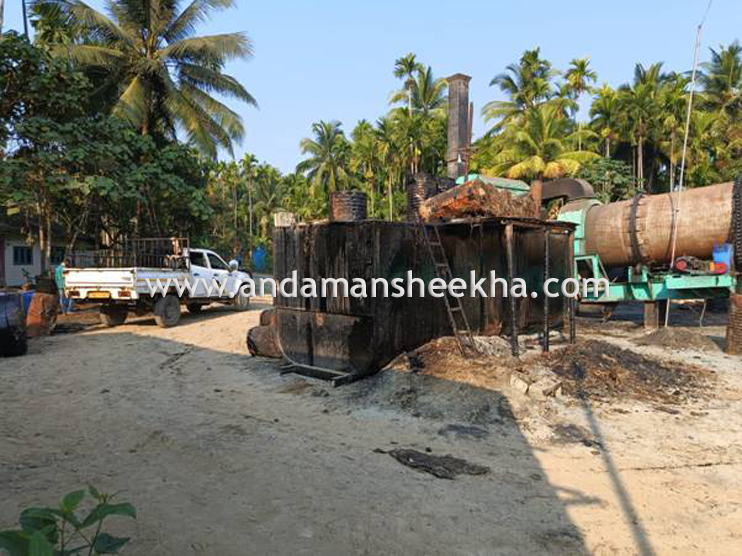
Port Blair, Mar 03: More than 100 residents of Laxmipur Panchayat ward number 04, Diglipur area are facing severe air pollution due to the operation of a new bitumen plant in the area, which was installed just three months ago. The villagers, including women and children, have demanded that the District Administration immediately take steps to stop the plant as it is causing significant health hazards to the local community.
The villagers allege that the bitumen plant is operating in the residential area of Laxmipur Panchayat ward number 04, which is home to around 100 houses with a population of 250 to 300 people.
The plant’s operation is resulting in the entire village being covered in dust, smoke, and carbon, leading to respiratory issues.
Speaking to Andaman Sheekha, Mr. Sujan Kumar Das, Pradhan Gram Panchayat Laxmipur, Diglipur, said, “Our villagers in ward number 04 are facing many problems due to the NHIDCL road constructing company recently installing the bitumen plant. The plant’s smoke exhauster height is very low, not greater than 20 to 25 feet, which causes the smoke to spread throughout the village. The smoke covers an area of up to 1km, and some families have even sent their old parents and small children to their relative’s houses. We request the administration and NHIDCL to shift the plant to a more suitable location, and until that happens, we request that the smoke exhauster height be increased.”
Andaman Sheekha contacted a senior officer of NHIDCL, who stated that they have no information about the bitumen plant in Laxmipur Panchayat and will investigate the matter. The officer also added that they have not received any written complaints about the issue and will take action as necessary once they receive a complaint.
The local community is calling on the District Administration to take swift action and ensure that their health and well-being are not compromised. With the air pollution levels reaching alarming levels, the villagers’ demand for immediate action is more critical than ever.


