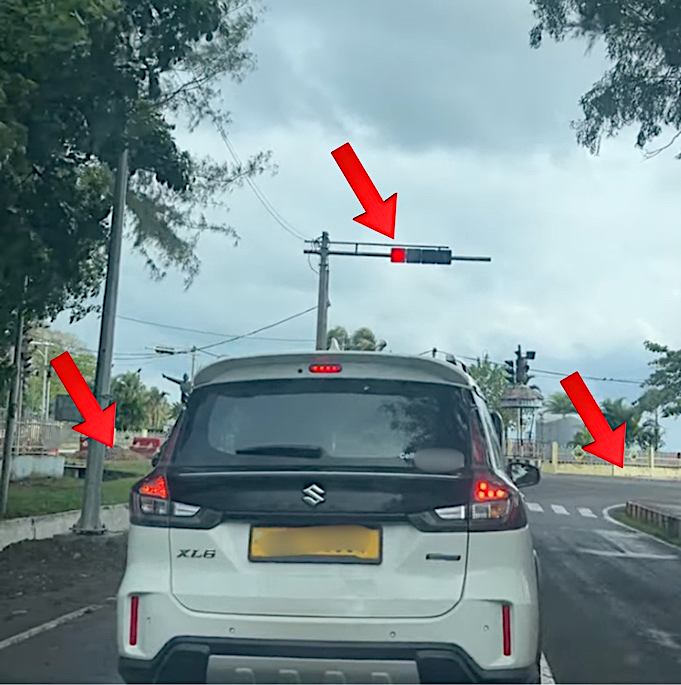
For a city that has grappled with traffic management for over last few years, the story of traffic signals in Sri Vijayapuram is one of repeated attempts and recurring disappointments. What should have been a straightforward step toward modern urban mobility has instead evolved into a prolonged exercise marked by delays, inconsistencies, and a visible lack of coordination.
The installation of traffic lights at key junctions has been attempted several times in the past, yet most of those efforts failed to deliver lasting results. In recent years, renewed initiatives under the Smart City framework have once again raised hopes. However, the slow pace of implementation and prolonged testing phases have only added to public frustration. Instead of easing traffic flow, the current situation has left residents puzzled, often questioning whether the system is being executed with the seriousness it demands.
At the core of the issue appears to be a disconnect among multiple agencies. Traffic management is not the responsibility of a single department; it requires seamless coordination between the traffic police, transport authorities, and the technical teams responsible for installation and maintenance. The absence of such coordination is evident on the ground. Signals function erratically—operational at times, defunct at others—with no clear mechanism to monitor or rectify faults promptly.
Equally concerning is the lack of public feedback in the planning and execution process. Traffic systems are meant to serve the people, yet there is little evidence of citizen input shaping their design. As a result, signals have been installed even at locations where traffic volume does not justify their presence. This has led to peculiar situations where pedestrians and motorists are forced to wait at empty intersections, watching the clock tick despite no oncoming traffic. Such experiences do not just waste time; they erode trust in the system.
The inefficiencies become more pronounced along frequently used routes. A commuter traveling across a short stretch may encounter multiple signalized junctions, each adding unnecessary delay. What should be a quick journey often stretches into a longer, more frustrating commute. The inconsistency in signal operation—sometimes working, sometimes not—further compounds the problem, creating confusion and, at times, safety risks.
One glaring omission in many junctions is the absence of a free left turn. This is a universally accepted feature in traffic management, designed to keep movement fluid even when signals are in operation. Its absence in several parts of the city has resulted in avoidable bottlenecks, raising questions about the planning standards being followed. For a region with relatively moderate traffic volumes compared to metropolitan cities, such oversights are difficult to justify.
The solution does not lie merely in installing more signals but in adopting a smarter, more responsive approach. Traffic systems must be dynamic, not static. At low-traffic intersections, signals should adapt or even remain inactive when unnecessary, allowing smooth passage. Conversely, during peak hours, they must operate efficiently to regulate flow and prevent congestion. This requires not just technology but also a commitment to regular monitoring and professional oversight.
There is also an urgent need for a comprehensive review of the existing network. Each junction must be assessed based on actual traffic patterns rather than theoretical assumptions. Feedback from daily commuters, local residents, and stakeholders should form a critical part of this evaluation. Without such engagement, even well-intentioned projects risk missing their mark.
Ultimately, traffic management is as much about discipline and planning as it is about infrastructure. The people of Sri Vijayapuram deserve a system that respects their time, ensures their safety, and reflects a thoughtful use of public resources. The current state of traffic signals, however, suggests that the journey toward that goal is still far from complete.


