
Dr. Dinesh Dental Surgeon B.D.S(Cal Univ), PGDHHM, PGDMLS, PGDMC
The Japanese bunkers scattered across the Andaman & Nicobar Islands, particularly from the vicinity of the Gymkhana Ground (near Aberdeen Bazar Post Office) and G. B. Pant Hospital to the scenic Corbyn’s Cove Road in Sri Vijaya Puram, are often overlooked as relics of a distant conflict. Yet these reinforced concrete structures are among the most enduring reminders of the island’s strategic role during the Second World War. More than eight decades after their construction, they present a unique opportunity to preserve an important chapter of history while enriching the island’s heritage tourism.
Constructed during the Japanese occupation of the Andaman Islands between March 1942 and October 1945, these bunkers formed part of an extensive coastal defence network designed to guard against an anticipated Allied offensive. Strategically positioned overlooking the sea, their thick reinforced concrete walls and compact design reflected the military engineering standards of the time.
Their remarkable resilience is perhaps their greatest legacy. Despite decades of exposure to tropical weather, heavy monsoon rains, coastal salinity and repeated seismic activity, many bunkers remain structurally sound. They also withstood the devastating 2004 Indian Ocean earthquake and tsunami, a testament to the quality of their wartime construction.
Today, however, many of these structures remain undocumented and underappreciated. Thousands of residents and tourists pass them every day without realising their historical significance. This represents a missed opportunity for heritage conservation, education and sustainable tourism.
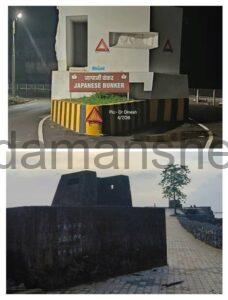
The Andaman and Nicobar Administration deserves appreciation for taking initial steps to preserve a few bunkers along the Corbyn’s Cove Road by cleaning, painting and installing informative signboards. These efforts have improved public awareness and demonstrated the heritage value of these wartime structures. One particularly fascinating bunker even stands in the middle of the present-day road alignment, silently reminding visitors how modern infrastructure has evolved around these historic fortifications. Such examples make the Corbyn’s Cove stretch an ideal location for developing a well-planned World War II heritage corridor.
A comprehensive conservation programme involving the Archaeological Survey of India (ASI), the Andaman and Nicobar Administration, historians, conservation architects and academic institutions would help scientifically document, assess and preserve all surviving bunkers across the islands. Where appropriate, collaboration with Japanese heritage experts could further strengthen research and conservation while promoting mutual understanding rather than revisiting wartime divisions.
Interpretation is equally important. Multilingual information panels, QR-code-enabled digital content, guided heritage walks and an interactive World War II Interpretation Centre could help visitors understand the strategic importance of the Andaman Islands during the war. Technologies such as augmented reality could recreate wartime scenarios without altering the original structures, making history more engaging for younger generations.
These bunkers also possess enormous educational value. They can serve as open-air classrooms for students of history, archaeology, architecture, engineering, military studies and disaster resilience. A dedicated World War II Heritage Trail connecting Corbyn’s Cove with other surviving Japanese-era sites could diversify tourism beyond beaches and water sports while creating opportunities for trained local guides, researchers and heritage professionals.
India and Japan today share a close strategic partnership based on mutual trust, economic cooperation and a shared vision for a free, open and inclusive Indo-Pacific. In this context, the bunkers should be viewed not merely as reminders of wartime occupation but as historical assets that encourage reflection, reconciliation and learning. Across the world, former military sites have successfully been transformed into places of remembrance and education. The Andaman Islands have a similar opportunity.
Preserving these bunkers is not about glorifying war. It is about safeguarding historical evidence, honouring the experiences of the islanders who lived through a defining period in their history and ensuring that future generations understand both the hardships of conflict and the enduring value of peace.
Having survived war, earthquakes, the 2004 tsunami and the relentless passage of time, these silent sentinels deserve far greater recognition. With scientific conservation, thoughtful interpretation and a long-term vision, the Japanese bunkers can be transformed from forgotten wartime relics into living heritage strengthening the cultural identity of the Andaman Islands while preserving an invaluable legacy for generations to come.
Author is a Dental Surgeon and freelance journalist based in the Andaman Islands. He writes on heritage conservation, healthcare, aviation, tourism, environmental issues and other matters of public interest. E-mail dineshdentalclinic@gmail.com


