Signature: I9fofmJlp7iw6tK5W/wWgkV2n2AyAPZvYE/5FnnM2UOKKOsjOku7gJ2vBGWrtxGBIKdI71kcN75zIVZ7MKVuY9+XxogMyDM/5zPfsG4wc12Glb500VHgEmFmCJ7yJkTpFyBI3IR+usnoCU7tXEVqf1CKr4OYo43kcnd7jwbVczG/xcAcingGJtMy+pF/vf4eKAzFq27yGzFipjGOr349ujiXw8PMD9oKpOnigFNO+gPmQHuaLPdg6JtwIOlS9h97aPdPjdxzIDnq1sjlXUnEAh4+Tf0tP2dXItB2ZVxLki1bIumEjAMv4CbrroePLMwc9OrnAn0TLFglCMbKA3DtXLB0Lvc66idEJB1fDGLGBdhDD6DFk4+r5llMuPJWCXkUs6rLwjm3GJzF+9BkyDhlu8zlWScsviARYnFvSmbiGtiO7op82k/JEta7qvN9Y+A7E5bB2VIR1Jk+/TPMJu8YNbVZm+7hct1r67EyhGaaiKb2x7/c0e6nf8JMO1c/EwmhzqVXIEI3T0T8CpLR3MXiypF2Blnwex0H6FHMW5et9dBGNW6OpXXg8FPpokY3oLZxw+MbBVtxKHVhm0k4s9wRKYjiJ6gns+sCmEYcprjd//1arC9w655KmKtKumvm7zUZLhcNNLHOi3KUgPrlstgB2gUCuvFYtFFuOlPLhiQ1B1PYxJrCKy6AnRlj4S8C6CoRDwBAXcVQGVUy2+v6aJI+Y76V5zsbXMNjXmrvJ6ER6TG2KTSTNyfKULSS394dt2G2hMuATodLkGz/5j72q/ch2FxDARR1bHM1a4ilz4M+8Ksmkoad6TvsrMYJI6nlTLLQ1fUmZI6CnxbzWfFSZcUECNTMpHk+MTs/DoL1XP1LvTJAZ5LuNyutD+0iIwDNZgK876Zzv4/fFsiq011qYTz4IeB+Yr9ztctlX6jHUPM/R+GEWMHNmRsTJUr+GLWXpwRIaXV8gcUP97ncHGeIQtcpSxRFS8t6ZuH39HblCwE0xC4=
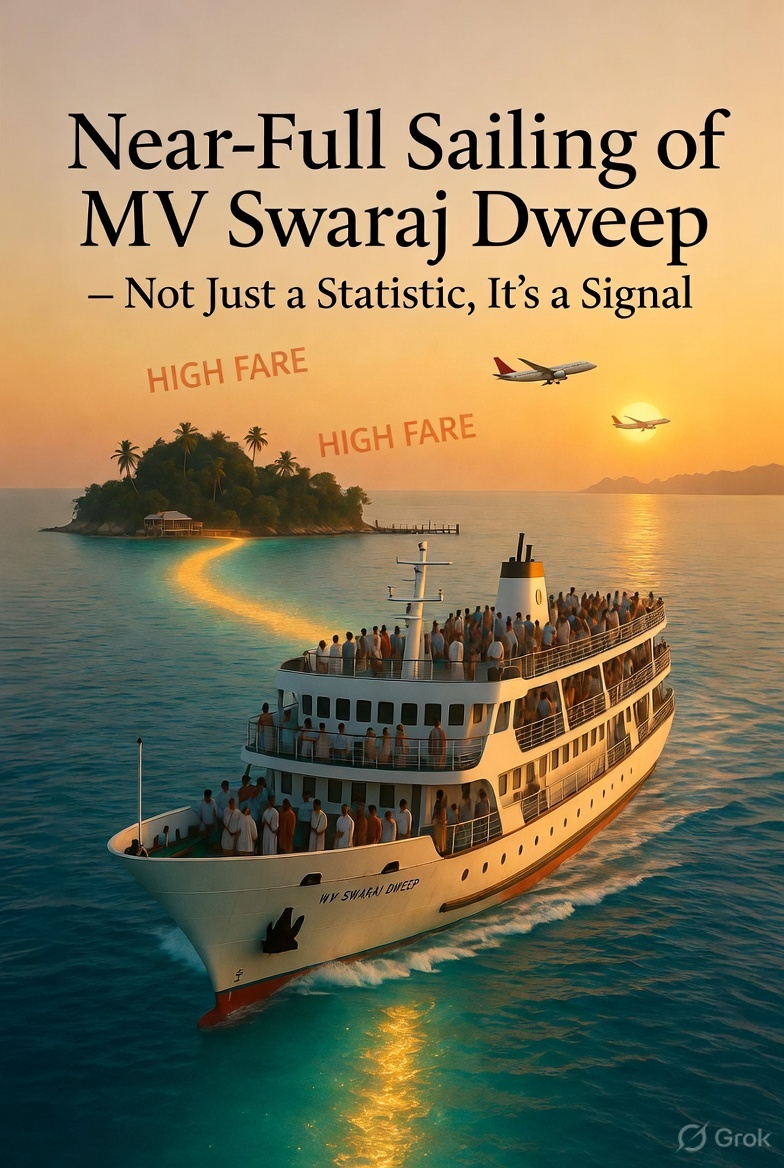
After a considerable gap, the sailing of MV Swaraj Dweep on 11 April 2026 from Sri Vijaya Puram to Chennai with near full passenger capacity is more than just a routine voyage—it is a powerful reminder of a reality the islanders have always known: shipping remains the true lifeline of the Andaman & Nicobar Islands. At a time when soaring airfares continue to burden common citizens, the overwhelming response to this sailing clearly reflects a shift back to sea-based connectivity.
In recent months, multiple reports have highlighted the persistent issue of high air ticket prices between the islands and mainland cities, making travel increasingly unaffordable for ordinary residents. This has compelled many to rely on passenger vessels, which, though slower, remain significantly more economical and accessible.
Historically, maritime transport has been the backbone of connectivity in this archipelago. With no rail or road links to the mainland, ships are not merely an alternative—they are a necessity. A single vessel like MV Swaraj Dweep can carry over a thousand passengers in one voyage, offering an affordable option for students, patients, workers, and families. This affordability becomes crucial in a region where travel is often not a luxury but a necessity for healthcare, education, and livelihood.
The strategic importance of maritime transport extends beyond passenger movement. The recent global tensions affecting key shipping routes, such as disruptions linked to the Strait of Hormuz, exposed how vulnerable supply chains can be. Even temporary disturbances can lead to shortages of essential commodities like fuel and LPG across remote regions. Such situations underscore a critical lesson: a nation’s maritime strength is directly linked to its economic and social resilience. For island territories like Andaman & Nicobar, this dependence is even more pronounced.
What is now required is a comprehensive and forward-looking maritime policy for the islands. The Andaman & Nicobar Administration must prioritize the procurement of new, modern vessels equipped with better safety, comfort, and fuel efficiency standards. Increasing the frequency of sailings, improving port infrastructure, and integrating digital ticketing and real-time tracking systems can further enhance reliability.
The islands hold immense geopolitical significance in the Indian Ocean, and a robust shipping network strengthens both civilian life and national security.
The near-full sailing of MV Swaraj Dweep is not just a statistic; it is a signal. It tells us that when affordability meets necessity, people will always choose reliability over speed. The sea has always sustained these islands—now it is time for policy to match that reality.
A stronger, modern, and resilient shipping sector is not just desirable—it is indispensable for the future of the Andaman & Nicobar Islands.


