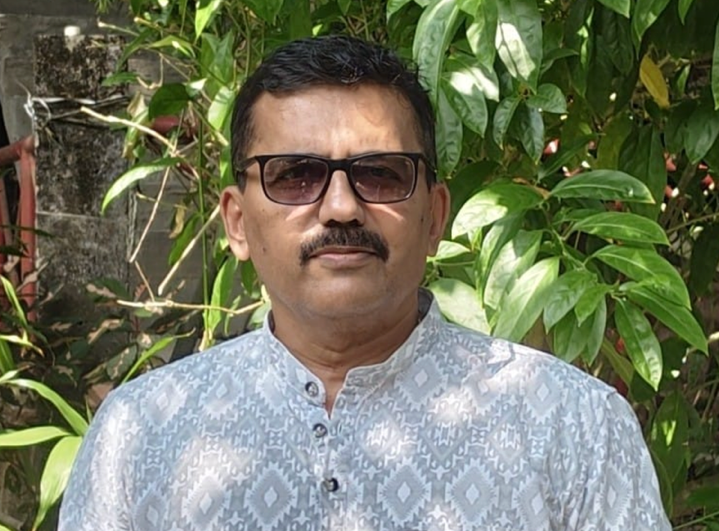
Sanjay Balan
The Andaman and Nicobar Islands are still too often viewed through borrowed images. To some, they are only Kala Pani and the Cellular Jail. To others, they are beaches, forests and tourism brochures. To still others, they are remembered briefly through Netaji’s visit and wartime symbolism. But the real history of these islands is deeper, harder, and far more revealing. It is the history of how land was used first to control people, then to resettle the displaced, and how even today that old instinct of control continues to shape island life.
Under British rule, the islands were not merely a remote prison. They were a colonial design. Convicts were transported here, confined, put to labour, graded, and in many cases pushed into cultivation and settlement under strict supervision. Forest was opened up, not to empower local society, but to sustain the colony and extend imperial authority. Land, labour and power were tied together from the very beginning. In the Andamans, land was not simply a resource. It was an instrument of rule.
The Cellular Jail became the most visible symbol of that regime, but it was only one part of a wider system. The British were not merely punishing individuals; they were organising territory through control. Even where convicts moved into freer conditions, the structure remained supervisory. The purpose was never full freedom. It was managed dependence. That history matters because it shaped a mindset: land in these islands came to be governed less as a foundation for local growth and more as something to be watched, directed and controlled.
Then came the Japanese occupation, one of the darkest periods in island memory. For many islanders, this phase is remembered not through slogans but through fear. Arbitrary arrests, torture, executions and widespread repression marked those years. Public memory often highlights the nationalist importance of Netaji Subhas Chandra Bose’s visit in December 1943, and that is understandable. But that symbolism cannot be allowed to hide the brutality of the occupation itself. The Humphreygunj massacre of 30 January 1944 remains a grim reminder that wartime Andaman was not only a patriotic memory site; it was also a place of deep local suffering.
If the pre-Independence history of the islands was marked by punishment, surveillance and wartime terror, the post-Independence period brought a dramatic change in purpose. After 1947, the islands slowly began to move from being a place associated with exile into a place associated with rehabilitation and settlement. That transformation was not cosmetic. It was one of the most important shifts in the history of the territory. But it did not happen on paper alone. It had to be built, village by village, family by family, often under very difficult conditions.
Partition uprooted millions. Among them were large numbers of Bengali Hindu families from what became East Pakistan. They crossed into India not out of convenience but compulsion. They had lost homes, security and continuity. Faced with the enormous burden of rehabilitation, the Government of India identified different places for settlement. The Andaman and Nicobar Islands became one such destination.
For those who came here, this was no ordinary migration. They arrived not into a settled and ready world, but into a remote, forested and thinly connected island territory where almost everything had to be made from the ground up. Forest had to be cleared. Villages had to be established. Livelihood had to be secured. Homes had to be built. Children had to be raised in conditions of uncertainty. The early settlers did not inherit convenience. They created it.
That is why the post-Independence settlement story deserves far more space in island history than it usually gets. The first generation of settlers, especially displaced Bengali families, bore a crushing burden. They carried the pain of uprooting, but had no option except to work through it. The language of official files may call this rehabilitation. In reality, it meant sustained hardship, labour, scarcity and resolve. They converted allotment into habitation, and habitation into rooted life.
This should not be told as a story of state benevolence alone. Government support did matter. Land was allotted. Settlement schemes were framed. Basic help for livelihood was extended. Roads, schools, markets and public institutions gradually followed. But state policy only opened the door. It was the settlers who walked through it and built a society on the other side. They turned forest clearings into villages and uncertainty into continuity.
Nor was this transformation the work of one community alone. Bengali settlers were central to it, but they were joined over time by ex-servicemen settlers, particularly in Great Nicobar, by Malayali settlers, Sri Lankan Tamil settlers, Ranchi-origin communities and others from different parts of India. Together, they helped produce the plural, layered and interwoven society for which the islands are known today. The Andaman and Nicobar Islands did not become “Mini India” by accident. They became so through struggle, settlement and coexistence.
And yet, even after this long journey, a hard question remains.
The purpose of land changed after Independence, but the instinct of control did not disappear as fully as it should have. The penal colony ended. The Republic came. New communities were settled. A new land law replaced the old regime. But the administrative mind has too often continued to treat land not as a living base for local growth, but as an object of supervision, suspicion and executive dominance. That is why many islanders feel that the land regime still carries the shadow of its colonial past.
This is not a rhetorical complaint. It is part of lived island experience. For many people here, the interpretation of land law remains one of the biggest hurdles to flexibility, investment, development and local initiative. The same land that was once used to sustain colonial authority, and later transformed through settler labour into villages, farms and homes, is still too often governed through a mindset that seems more comfortable with restriction than trust. The people moved ahead. The governing instinct, too often, did not.
That is why the history of the Andaman and Nicobar Islands cannot be reduced to prison walls, wartime memory or postcard scenery. It is also the history of land — land as control, land as rehabilitation, land as settlement, and land as an unfinished democratic question. It is the history of a territory that travelled from penal domination to civilian belonging, but has still not fully completed its journey from command to confidence.
The islands once symbolised exile. Later, they became a place of resettlement and rooted life. The communities that came here after Partition and in the decades that followed did not remain outsiders. They became islanders. They turned forest into village, allotment into home, and displacement into dignity.
That achievement deserves more than ceremonial praise. It deserves a land regime worthy of the society that settlers and their descendants helped build. If the Andamans have already travelled from colonial punishment to human settlement, then the next task is clear: land in these islands must finally be governed in the spirit of democratic trust, local growth and human possibility — not through the lingering reflexes of a controlled past.
That is the unfinished journey of Andaman.
(The writer Mr. Sanjay Balan, though retired from government service, he continues to blend governance insight, land-law expertise, and candid public commentary in service of Island development) (Note: Views expressed in this column are writer’s own)


