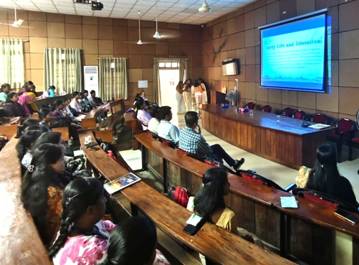
Sri Vijaya Puram, Mar 06: The 9th Dr. T.C. Khatri Memorial Lecture was successfully organized at JNRM, Sri Vijaya Puram, continuing the tradition of honoring the academic legacy of late Dr. T.C. Khatri. This year’s lecture was delivered by Dr. Ningombam Somorjit Singh, noted anthropologist and Head of the Anthropological Survey of India (Andaman & Nicobar Regional Centre), on the theme “PVTGs of Andaman & Nicobar Islands: Origin & Distribution.” Dr. Singh provided a comprehensive anthropological perspective on the origins and distribution of the Particularly Vulnerable Tribal Groups (PVTGs) of the islands. Principal J.N.R.M., Dr. Pearl Devdas, in her message emphasized that the Memorial Lecture series has become a platform for nurturing curiosity, encouraging critical thinking, and inspiring the younger generation to contribute meaningfully to the society. Dr. K.C. Joshi, Chairman, highlighted that initiatives like these not only honor the academic legacy of Dr. T.C. Khatri but also play a vital role in motivating students to engage deeply with anthropological and cultural studies. Earlier, Lt. Dr. V.K. Sahu, Convener of the Memorial Lecture, welcomed the gathering and spoke about the aims and objectives of the series. He emphasized that the lecture is designed to foster academic dialogue, inspire students, and preserve the intellectual legacy of Dr. Khatri. Ms. Navya presented a brief biodata of Dr. T.C. Khatri, highlighting his academic contributions and legacy. Ms. Pushpa, Faculty in Zoology shared her personal experiences with Dr. Khatri during her student days, recalling his guidance and inspiration. Ms. Ankita Mondal, Faculty in Zoology proposed the vote of thanks, acknowledging the speaker, organizers, and participants. The entire programme was compared by Ms. Sunitha and Ms. Rishita Ganni P., ensuring smooth conduct of the event. The lecture was witnessed by students of Zoology, Botany, and Home Science, along with Heads of Departments and faculty members, making it a truly interdisciplinary academic gathering.


