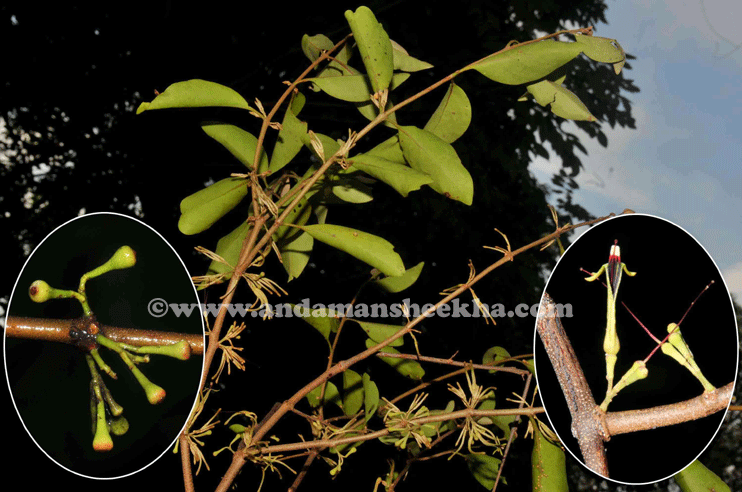

Port Blair, Jan 20: Scientists of the Botanical Survey of India (BSI) here have discovered two new hemi parasitic species of mistletoe in the Andaman and Nicobar Islands.
The Andaman and Nicobar islands constitute one if the hotspots of biodiversity in the country with 572 Islands. The Dy. Director & Scientist, BSI, Dr.Lal Ji Singh stated that, except for few notable exceptions, there has never been a comprehensive attempt to establish a systematic documentation of mistletoes by taxonomists in the Andaman and Nicobar Islands.
However, the phytodiversity of these islands is one of the unique and richest not only in the country but also at global level with remarkable degree of genetic variations because of this the new species are still continued to be discovered in these Islands.
During a recent trip to North and South Andaman, lead researcher and taxonomist, Dr.Singh discovered two endemic and haustorial hemi parasitic species: Scurrulaparamjitii and Macrosolenandamanensis. The species Scurrulaparamjitiiis named in honour of Dr. Paramjit Singh, Director & Scientist, Botanical Survey of India, Ministry of Environment, Forest and Climate Change for extensive contributions to the knowledge of Angiospermicflora and Macrosolenandamanens is named in honour of the place of discovery; Andaman Islands.
This species differs from all other mistletoesby its morphology of vegetative and floral characters. These discoveries were published more recently in the International Journal of Life Sciences, Taiwania 60 (3):123‒128 and Indian Journal of Forestry 36(1):55-59 respectively.
It is widely accepted that the spread of mistletoe species is by seed dispersal and these are usually mediated by birds that thrive on mistletoe fruit or host through fecal excretions or regurgitations. Dr. Singh stated that in Indian mistletoes grow on a wide range of host trees. He believes that the parasitization and selection of host species is either an opportunistic phenomenon or an availability of host through time and space.
The Deputy Director and Scientist, BSI, Dr. Lal Ji Singh also stated that, during the course of evolution, the parasitic mistletoes habit has evolved independently five times within flowering plants with worldwide distribution except Antarctica. About 1% of the flowering plants are considered to be parasitic of which ca. 1400 species are classified as mistletoes at global level.
It is ecologically and economically significant. Mistletoes are now known as “cure all” and have been found beneficial as a drug/remedy for various health problems. Indian taxonomist Dr. Lal Ji Singh stated that Mistletoes possess many ethnomedicinal assets andthe importance of the mistletoes in ethnopharmacology is now well known It is supported by the scientific information recorded in the pharmacological studies not only in India but also at global level. It is now appreciated that mistletoes are therapeutically useful in oxidative stress induced health problems and potential sources of natural anti-oxidants, and have great potentials as medicinal agents and known as “cure all” and have been found beneficial as a drug/remedy for various health problems.


We feel proud to see you in leading newspaper and excellent job. Congratulations!!!!!!!!!!!!!!!!!