DJ Venkatesh & Tarun Kartick
Port Blair, Sep 13: India a country so distinct is the largest Democracy of the world and is second in terms of population. The policies, systems and priorities of our country are entirely different from any other country. We have unique systems to reach people and one of those unique systems is the Public Distribution System.
The public distribution system in India aims at providing basic commodities to the citizens at reasonable prices in an organized manner and for the distribution of the basic ration and the cooking fuel. Under the PDS, several Fair Price Shops are setup by the Govt. which provides its card holders with commodities at a price specified by the govt. of India.
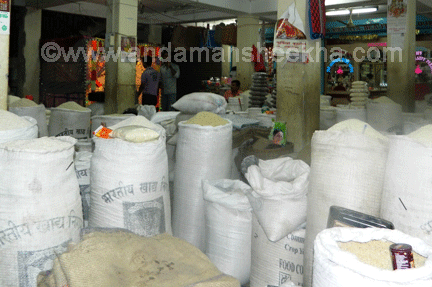
Andaman and Nicobar islands have altogether 597 Fair Price Shops and these Fair Price Shops procure the items from the Department of Civil Supplies and sells them to its registered card holders. In Andaman and Nicobar Islands Rice, Kerosene oil, Sugar and wheat are the commodities that are distributed under the PDS. Every FPS owner has a number of card holders under his shop; any customer can choose any fair price shop according to his convenience to fetch the items.
FPS shop owners get a quota of the commodities from the civil supplies according to the number of Card holders under them, but all the card holders do not buy the commodities from their FPS every month and the left out commodities are sold in the open market at high prices and the FPS owners earn a huge share of profit.
For instance the rice which is available of about Rs. 10/- at FPS is openly sold at market for about Rs.22/-, Sugar which is available at FPS at Rs. 13.50 /- is openly sold at FPS shops to other people at 40/-, Kerosene Oil, which is available at 13.45/- is openly sold to other customers at 25-23/- depending upon the demand. The saddest part of the story is that PDS items are available for sale only on limited days i.e one week or 10 days and after that period even the FIC card owners have to pay for the same according to the open market price.
Sadly these left over fair price items sold in the open market leads to huge losses to the local farmers who work day and night for bringing in their crops to market for some income. The left over items are flooded in the market every month and because of these items the local farmers are compelled to keep their price low and they suffer huge losses. The Department of Civil Supplies on one hand claims to curb corruption by various means and on the other hand the same department let the corruptions flourish in its own vicinity.
Andaman and Nicobar Administration should chalk out an action plan to curb the corruption by the Fair Price Shop Owners so that the commodities reach the common man without any hassles.


