
Sheekha Bureau
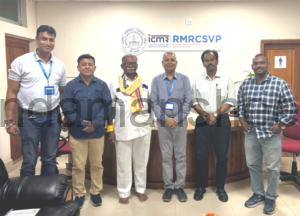
Sri Vijaya Puram, July 23: “If you develop fever in a leptospirosis-prone area, do not waste time trying home remedies or self-medication. Visit the nearest doctor immediately. Early treatment saves lives, while delay can allow the infection to spread rapidly to multiple organs,” cautioned Dr. Aparup Das, Director of the ICMR-Regional Medical Research Centre (RMRC), Sri Vijaya Puram, during an interaction with media representatives.
Speaking at length on the growing importance of public awareness about leptospirosis—popularly known as “Andaman Fever”—the Director said the ICMR-Regional Medical Research Centre (RMRC) has already issued clear treatment protocols to doctors across the Andaman and Nicobar Islands. Medical officers have been instructed to begin appropriate antibiotic treatment, including doxycycline or penicillin-based therapy wherever clinically indicated, as soon as leptospirosis is suspected.
“The doctors know exactly what needs to be done. The problem is not with the treatment; the problem begins when people decide to treat themselves at home. Many patients spend four or five days taking medicines on their own or following advice from friends and neighbours. By the time they reach the hospital, the bacteria have already spread throughout the body. That delay becomes dangerous,” he said.
Explaining the seriousness of the disease, the Director noted that leptospirosis is caused by bacteria that do not remain confined to one part of the body. “Once the bacteria enter the bloodstream, they can simultaneously affect the lungs, liver, kidneys, brain and other vital organs. Even if one organ is protected, another may suffer severe damage. This is why early intervention is absolutely critical. If treatment starts from the very first day of symptoms, patients not only survive but are also far less likely to develop serious complications.”
The Director appealed to the public not to rely on over-the-counter medicines or advice from non-medical sources. “Do not try to diagnose yourself. Do not take medicines on your own. Do not listen to rumours or unscientific advice. Your first and only step should be to visit a doctor. This single action can save your life.”
He recalled that soon after assuming charge at RMRC, the Centre convened a comprehensive meeting with officials from the Directorate of Health Services (DHS) to review the situation relating to leptospirosis in the Islands. Senior officers, specialists and health functionaries participated in the discussions to assess existing treatment practices and identify areas where ICMR could provide additional scientific support.
“We asked the Health Department what assistance they required from ICMR. They informed us that doctors had already been sensitised regarding diagnosis and treatment protocols and that patients respond well when they report early. However, they highlighted one major challenge—public awareness. Most severe cases occur because people stay at home for several days after developing fever and seek medical attention only after their condition deteriorates,” he said.
Responding immediately, RMRC constituted a dedicated scientific team led by senior leptospirosis researchers. Within just five days, the Centre deputed scientists and technical experts to the field. The team spent nearly three weeks visiting Community Health Centres (CHCs), Primary Health Centres (PHCs), schools, colleges and villages across the Islands.
“Our scientists interacted not only with doctors and healthcare workers but also with teachers, students and members of the public. They explained the symptoms, the importance of early diagnosis and the need to visit hospitals immediately after the onset of fever. Awareness pamphlets prepared by ICMR were distributed widely, and many of these are still displayed at health institutions today,” the Director said.
He clarified that ICMR deliberately avoids advising the general public to consume antibiotics on their own. “We never tell the community to take doxycycline or any other medicine without medical supervision. If we start promoting medicines directly among the public, people may misuse them. Our message is very simple and consistent—if you have fever, consult a doctor immediately. The decision regarding medicines should always be taken by a qualified medical practitioner.”
The Director also explained why leptospirosis cases increase significantly during the monsoon season. According to him, rainfall plays a crucial role in spreading the bacteria.
“During the dry season, the bacteria do not spread easily because there is very little flowing water. Once the rains arrive, contaminated urine mixes with rainwater and the bacteria are carried into the surrounding environment. This greatly increases the chances of human exposure. That is why we see more cases during the monsoon.”
He revealed that RMRC scientists have made significant progress in understanding the environmental behaviour of the leptospirosis bacteria in the Islands and that important scientific findings are expected to be shared after ongoing research is completed.
Highlighting RMRC’s national role, the Director said the Centre serves as India’s premier referral laboratory for leptospirosis and supports laboratory networks across the country and neighbouring regions. The Centre assists laboratories in establishing diagnostic facilities, standardising testing procedures and ensuring quality certification for leptospirosis diagnosis.
“Any laboratory in India or even neighbouring countries intending to establish leptospirosis diagnostic capability approaches us for scientific guidance, validation and certification. As the national referral centre, we remain committed to strengthening surveillance, diagnostics and research so that this disease can be detected early and treated effectively.”
Dr. Aparup Das said that while leptospirosis has received considerable attention, the Andaman and Nicobar Islands continue to face several other tropical and infectious diseases because of their unique geographical and climatic conditions. He said ICMR-RMRC is actively conducting research on multiple diseases that affect the Island population.
Speaking on malaria, Dr. Das said the disease remains under constant surveillance in the Islands. Although malaria cases have reduced considerably over the years due to improved diagnosis, treatment and vector-control measures, RMRC continues to monitor the disease closely to prevent any resurgence and to study changing transmission patterns.
Dr. Das said the COVID-19 pandemic significantly strengthened research capacity and disease surveillance systems in the Islands. During the pandemic, ICMR-RMRC played an important role in laboratory diagnosis, scientific guidance and supporting the administration. The experience has further enhanced the Centre’s preparedness to tackle future outbreaks of infectious diseases.


