Signature: St17iChgIH/d84qPZQwoifcV4wYIOJuyxPdNf/sKGBWCnpXlMbpEbMx/MhOwcI0IOx5HKQbepnpDaXm+6epyfyJTJw9sgF26j+J8m9lrc3SCaMaSAED/0jmWN/igJvy5sODtW3sX3ErfJPz67elYVVdFmH7RapcIzIBgQAPYfBtMPvar94Iq6Q1w+y/eq+ZoQ1B7j8IVnV3LoPgkX3H7nHgryR6j9C6OQfB+Eq4M2dQl0x0fgbtMEN3QITdRyN7VpgUnNUSvWUAkzhubxJmiyh0ud2ReGHMoR6WcJAXwVXe6QHrO0Hdmc0esb/CKZRK11thh3klmCmqKO1kJXXrZ4+XALiVoGTxt9Gs+UR/3qHb16L/YizxoDPykR40GUO6fE8FbQS10A/NgFfZWQRhQluZw/Uub5mzGETxqbKOjILjkIb3q7VtjbD/6d4SeCkqJ5J1VkT20OWPAh29xSdGo2pvHlbjPlPfYrHiVm71E3NdF8LVIes9GAi89PllsCliVrF+R+x/yTFSgoitRoF8U+MwZ50PZmk1QuSJRrZEChW/G7/BqlBkdXTXfqGY9MjTRb6QniPVB2zWaHWmORrfloyredBOOCDyqAoNyvotrmc6c5EqBXJdRL+XTb4i9aPf+vgymlEasaODVkDhMKha7ycy128ltZbTrZoYvRHzdqfl3RFWEeT9oK8SbjS07FgX2pOEwiexAZ2CWY0TBZVWZVOKOFv4q3XFJxmAaquB38uEMXzNHRPoHZtJ6YImPOTodd9mLTjjLtlZC5ZmTRnEEAicutBcexTaVME1HVmvaF8CMDdsaU8oKM3Epf05DUcoxV3eDf6U9pCls7IYjuC42aVYjmNfF0NJ+hUwA4MwPMxUzqgkmw5Wg9Rpo9NjvZq2OqRQKfSAjrIAqzCpG5ZU2UYjrAUGOzbsh0itFShh6mvtXdIPY5TgQcZoWCW7hF3Cjxvq8qeNo4eRPO3S8D7MSf8S30aMynqzZ+4uAElwLGtA=
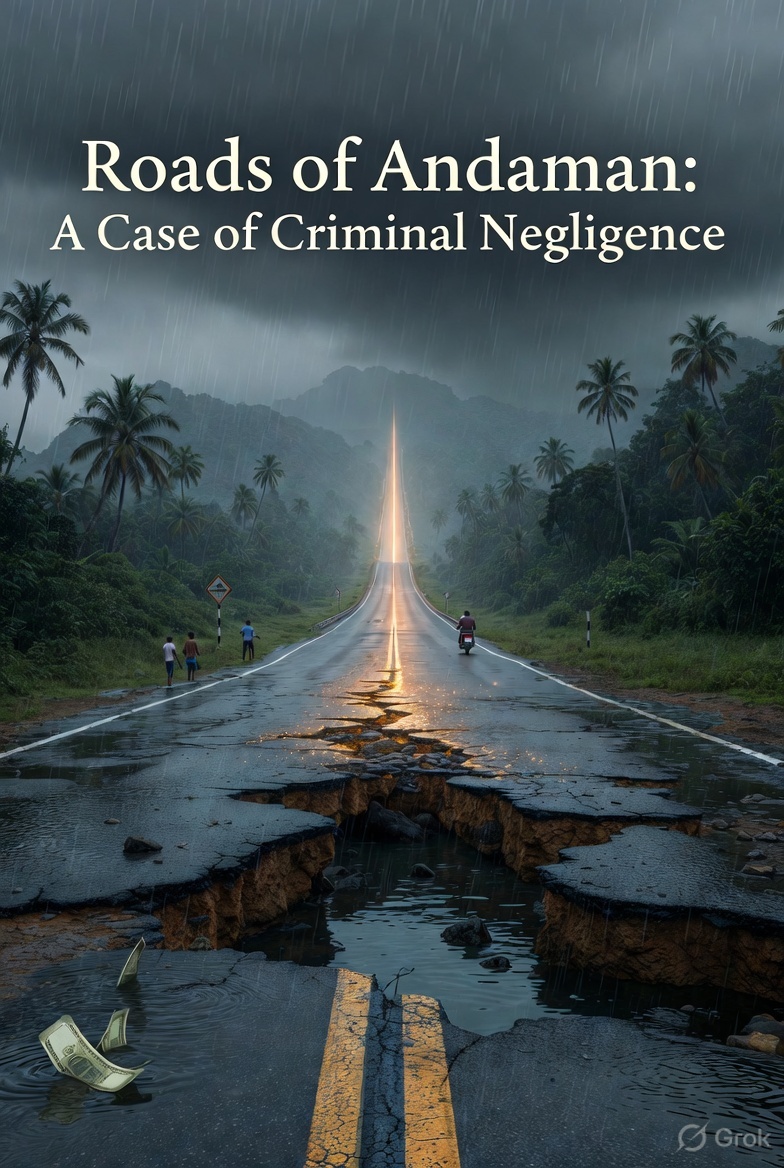
Roads are the lifelines of any society, connecting people, goods, and services. But in the Andaman & Nicobar Islands, including the much-delayed NH-4 which itself has been under construction for eight long years, the condition of most roads paints a picture of administrative apathy and engineering negligence. From Port Blair to the remotest village, citizens are forced to travel on roads full of potholes, broken stretches, and washed-out surfaces. The responsibility of maintenance lies with APWD and PRI engineering wings, yet the state of the infrastructure raises disturbing questions about their competence and accountability.
The core problem behind this recurring crisis is not only poor construction but the absence of proper roadside drains. In the islands, heavy rainfall is a predictable reality. When rainwater flows unchecked over roads instead of being diverted through drains, it erodes the top layers, weakens the base, and leaves behind gaping potholes within just months of construction. The irony is that even where drains exist, they are poorly designed or misaligned, defeating their very purpose. This is not a technical challenge beyond understanding—it is a basic engineering necessity that the officials simply fail to enforce.
As per the Central Public Works Department (CPWD) Works Manual, proper drainage is “an inseparable component of road construction and must be planned simultaneously with pavement design.” The manual clearly specifies that “surface and subsurface drainage arrangements shall be ensured to prevent stagnation and infiltration of water into the pavement layers.” In other words, no road is considered complete unless supported with effective drainage systems. Ignoring this guideline is not merely negligence; it is a blatant violation of prescribed engineering standards.
What makes the matter worse is the colossal waste of taxpayers’ money. Every year, hundreds of crores from the islands’ limited budget are spent on repairing and reconstructing roads, only for them to collapse again within six months. Islanders believe that this cycle of wasteful expenditure benefits only negligent contractors and complicit officials, while ordinary citizens continue to suffer. If the same funds were used to construct durable, properly drained roads, they would last 3–4 years at the minimum, as they are supposed to. It appears, the absence of accountability has turned road projects into a revolving door of corruption and inefficiency.
It is high time the administration treats this as criminal negligence rather than routine inefficiency. An independent committee must be set up to examine why roads are repeatedly failing, identify the engineers and contractors responsible, and recommend strict disciplinary action. Cases where quality lapses are evident must invite not just financial penalties but blacklisting of contractors and departmental action against supervising officers.
The people of the Andaman & Nicobar Islands deserve roads that last, not temporary patches that wash away with the first rains. Good governance is measured not by promises but by durable outcomes. The administration must wake up before yet another monsoon drowns the hopes of islanders—and their hard-earned tax money—into crumbling potholes.