
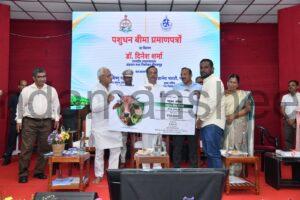
Sri Vijaya Puram, November 26: Lieutenant Governor Dr. Dinesh Sharma today inaugurated the Model Fodder Tree Farm at Dollygunj and inspected the fodder production methods developed there. He later attended the National Milk Day programme at the auditorium of Tagore Government College of Education here.
The farm has been developed over 1.89 acres (7,650 square metres) and has 16 species of fodder trees and six species of fodder grasses suited to the local agro-climatic conditions. Azolla and hydroponic fodder have also been demonstrated as alternative animal feed. The Lieutenant Governor called for wider publicity and dissemination of these methods so that fodder is available not only for cows but also for buffaloes, goats and other livestock.
The programme at the college began with the lighting of the ceremonial lamp. On the occasion, he released the Cattle Breeding Policy and launched dairy products developed by ANIIDCO, namely buttermilk, khoya and three varieties of lassi. Animal nutrition kits were distributed to five livestock farmers, livestock insurance certificates under the National Livestock Mission to five livestock farmers, and certificates, books and bags to ten Pashu Sakhis.
Addressing the gathering, the Lieutenant Governor said the Department of Animal Husbandry and Veterinary Services had worked to conserve indigenous cattle, improve breeds and increase milk production despite limited resources and geographical challenges. He said that, given the limited availability of fodder and the Islands’ dependence on milk supplies from the mainland, increasing local milk production and becoming self-reliant in the dairy sector were essential.
He asked Pashu Sakhis to visit villages and guide livestock farmers on animal care, first aid and other aspects of animal husbandry, and directed that their work be monitored regularly. He suggested developing an online portal on which Pashu Sakhis could upload details of their field visits and services, along with photographs. Under the scheme, Pashu Sakhis are paid an honorarium of Rs. 3,000 a month and about 60 per cent of the women have been trained, he said.
Describing the Livestock Insurance Scheme as an important financial safeguard for livestock farmers, he said the government bears 85 per cent of the insurance premium and farmers 15 per cent, and appealed to livestock farmers to enrol in the scheme.
He referred to a proposed initiative to bring around 500 cattle of improved breeds such as Sahiwal and Gir, and stressed scientific research for breed improvement and higher milk production. He noted the department’s efforts towards a target of 12 to 14 litres of milk per animal per day. Citing the Amul and Banaskantha dairy models of Gujarat, he said milk processing and value-added products would promote employment and economic activity.
He suggested exploring the manufacture of tiles, roofing tiles and other useful products from cow dung, the collection of cow urine, and energy generation through biogas plants, so that livestock farmers could earn additional income and self-employment opportunities could be created in rural areas. Expressing concern over the practice of abandoning cattle on roads after they stop giving milk, he stressed the tagging of animals, identification of their owners, and action as per the rules.
He directed that encroachments be removed from grazing lands and that adequate pastures be developed for livestock. Citing the 65-acre ‘Kanha Upvan’ developed during his tenure as Mayor of Lucknow, he suggested that a similar arrangement could be developed, in accordance with local conditions, at the gram panchayat level or through the collective efforts of two or three villages. He also expressed concern over the declining agricultural area in the Islands and stressed the need to protect the remaining agricultural land.
He appealed to farmers to cultivate fruits, vegetables and food grains along with commercial crops, so that dependence on the mainland for food items could be reduced and the availability of nutritious food locally could be enhanced. He said the animal husbandry and dairy sector could become an important medium for generating employment and self-employment in the Islands, and directed officers to ensure the continuous implementation of schemes and innovations, strengthen departmental coordination and monitor ongoing activities.
He expressed confidence that, through modern technology, improved veterinary services and community participation, the Andaman and Nicobar Islands would emerge as a model in animal husbandry and dairy development.
Member of Parliament Mr. Bishnu Pada Ray, Chief Secretary Mr. Gyanesh Bharti, Chairperson of the Sri Vijaya Puram Municipal Council Mrs. M. Vasantha, Adhyaksh of the Zilla Parishad Mr. P. Ummer, Secretary (Animal Husbandry and Veterinary Services) Mrs. Pallavi Sarkar, Deputy Commissioner, South Andaman, Purva Garg, Superintendent of Police, South Andaman, Shweta Sugathan, and other senior officers of the Andaman and Nicobar Administration were present.


