
Akriti Soreng
The Andaman and Nicobar Islands sit among the most spectacular geographical regions on earth, with their turquoise waters, coral architecture, and adventurous destinations. Yet, most of the world cannot easily reach them. The tedious domestic journey, requiring layovers in Chennai or Kolkata, or hours of sea travel, limits access to only a handful of routes and cities. This bottleneck is not just inconvenient—it is economically restrictive.
The infrastructure upgrade of Veer Savarkar International Airport, Sri Vijaya Puram, is not merely an aviation project; it is an economic catalyst that could fundamentally reshape the Islands’ economic architecture, transforming them from one of India’s most isolated tourist destinations into a strategic gateway to Southeast Asia.
Expansion of flight connectivity—more routes, more airlines, more frequencies, and more direct international links—could move the entire economy forward.
Andaman Tourism: Breaking the Isolation Premium
Currently, Andaman suffers from what economists call the “Isolation Premium.” Tourists pay inflated prices for everything from food to accommodation because every item must be shipped or flown through multiple transit points. A tourist who books a trip to Andaman today faces a narrow travel funnel: finding connecting flights, navigating limited frequencies, and absorbing higher costs caused by low competition.
Introduce direct flights from Bangkok, Singapore, or Kuala Lumpur into the equation, and the mathematics changes completely. Southeast Asian tourists who have already explored much of the Indian circuit would suddenly find a new and accessible destination on their travel map.
The Airports Authority of India (AAI) has already recognized this potential, waiving the User Development Fee (UDF) completely for the first year and offering concessions of 85% and 65% during the second and third years respectively. Notably, this scheme will remain applicable for three years. This initiative can save approximately ₹1.5 lakh per international flight, creating a financially viable environment for airlines to commence operations.
Tourism: From Niche to Global Destination
Andaman tourism continues to grow but remains far below its true potential. In 2023–24, the Islands received approximately six lakh visitors. Currently, the Islands attract mostly domestic tourists, with only a small proportion of international visitors who must navigate complex travel routes. Direct international connectivity would unlock three massive markets simultaneously.
First, Southeast Asian tourists, particularly from Thailand, Indonesia, Singapore, and Malaysia, would find Andaman closer and more convenient than many other destinations. The flight time from Bangkok to Andaman is barely two hours, making it a perfect weekend getaway for millions seeking pristine beaches without visa complications or long journeys.
Second, the cruise tourism and adventure tourism sectors could witness significant growth. Eco-tourism, scuba diving, and heritage tourism are already being promoted but remain underutilized due to accessibility barriers. International divers, biologists, and adventure enthusiasts would be more inclined to visit Andaman’s world-class reefs if they could arrive directly from their home countries.
Third, higher-spending international tourists could complement the existing domestic market. International visitors typically spend three times more per day than domestic tourists, directly boosting local businesses, hotels, restaurants, and service providers.
The basic infrastructure is already available; it simply requires policy support and strategic planning to emerge as the next globally recognized destination.
The Multiplier Effect on Local Employment
Here is where the multiplier effect becomes particularly important.
Every job in hospitality creates approximately 2.5 additional jobs in supporting sectors. This tourism multiplier effect is well documented across the world. International connectivity would trigger the construction of hotels, resorts, and supporting infrastructure, creating thousands of employment opportunities for local residents.
One of Andaman’s major constraints is the outmigration of talented youth. Many young people leave the Islands in search of better opportunities because professional growth opportunities remain limited in a remote location.
Greater connectivity also enables easier movement of professionals such as doctors, engineers, educators, and entrepreneurs who often hesitate to relocate because isolation feels permanent. When major cities are only a few hours away and accessibility improves, that psychological barrier begins to disappear.
Strategic and Logistics Hub
In a landmark move, Thailand’s Consul General, Ms. Siriporn Tantipanyathep, met Lt. Governor Admiral D.K. Joshi on May 20, 2026, to discuss direct flights, luxury resorts, wellness tourism, and adventure tourism opportunities. Both sides agreed to explore the development of Andaman and Thailand as interconnected premium destinations under India’s broader island development framework.
Beyond tourism, international flight connectivity could also function as India’s strategic logistics gateway under the Act East Policy. The Islands’ geographical location—closer to Singapore than Mumbai—makes them an ideal transshipment and aviation hub.
Night operations at Sri Vijaya Puram Airport are already being developed, and technical en-route stops could allow international carriers to refuel and embark or disembark passengers without full immigration clearance, potentially reducing operational costs.
This connectivity may also boost exports of Andaman’s unique products, including aromatic rice, handicrafts, fruits, and marine products. Perishable goods that currently risk spoilage during multi-day sea transport could reach international markets within hours, commanding premium prices.
The Sustainability Caveat That Must Be Addressed
Growth without governance has damaged islands before. Phuket, Bali, and parts of the Maldives bear the scars of connectivity that outpaced planning.
The argument here is not for unrestricted expansion. It is for carefully designated connectivity routes tied to carrying-capacity assessments, visitor-management strategies, conservation funding, and zoning regulations that keep development pressure away from ecologically sensitive areas.
Andaman’s economy is ultimately a function of its ecology. The two must grow together; otherwise, economic expansion could destroy the very natural assets that drive it.
The key lies in implementing eco-certification standards and carrying-capacity limits, which become more feasible when governments generate additional revenue from international aviation and tourism that can be reinvested in conservation.
A Tipping Point for Transformation
The economic mathematics are undeniable. International connectivity can reduce travel costs by 30–40 percent, increase tourist arrivals by 200–300 percent over the coming years, and generate income opportunities for more than 50,000 people, directly or indirectly. The Islands could evolve from a peripheral territory into a self-sustaining economic powerhouse.
This is not mere speculation but a proven model demonstrated by destinations such as the Maldives, Bali, and Phuket, all of which transformed their economies through international air connectivity. Andaman possesses superior natural assets; it simply needs the policy vision and courage to open its skies.
The green light from the DGCA and the Ministry of Civil Aviation for expanded operations could become the catalyst for this transformation.
Andaman does not need to become the next Goa. It should become Andaman first—a world-class island economy on its own terms, accessible enough to thrive and protected enough to endure.
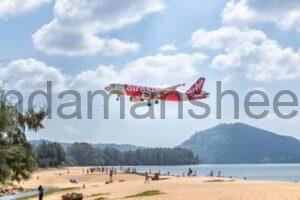
The next plane that lands here will not merely carry passengers. It will carry possibility. (Note: This Article is written by Akriti Soreng, Intern, Andaman Sheekha Daily)


