
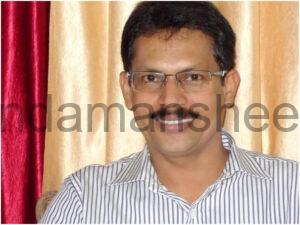
By Dr. Dinesh
The media plays an indispensable role in a democracy, serving not merely as a source of information but also as an important bridge between citizens and the administration. In the Andaman and Nicobar Islands, local newspapers, digital news portals and regional-language publications regularly highlight public grievances, civic concerns and administrative shortcomings affecting everyday life.
One encouraging feature of the local media landscape is the continued emphasis on public-interest journalism and responsible reporting. By bringing citizens’ concerns into the public domain, the media gives visibility to issues that might otherwise go unnoticed. Its contribution to highlighting people’s problems deserves appreciation.
However, the true purpose of such reporting is fulfilled only when the administration responds. If bureaucrats, departmental heads and officials make it a practice to read local newspapers regularly and take cognisance of the issues raised, many grievances could be resolved at the initial stage itself. Whether it concerns damaged roads, irregular water supply, poor sanitation, public safety or delays in essential services, timely administrative intervention can make a significant difference.
In a geographically dispersed Union Territory like the Andaman and Nicobar Islands, where communication and accessibility pose unique challenges, the local press can serve as an effective feedback mechanism for the government. It often brings ground-level realities to the attention of decision-makers much faster than conventional channels of official correspondence.
Newspapers are rightly described as the Fourth Pillar of Democracy. Their responsibility extends beyond reporting events and government decisions. They must question, scrutinise and hold institutions accountable. Equally, the administration must understand that constructive criticism is not hostility but an opportunity to improve governance.
A newspaper report highlighting a public grievance should not be viewed as an embarrassment to a department. Instead, it should be treated as an opportunity to identify shortcomings and initiate corrective action. Officials need not always wait for repeated representations or formal complaints when an issue has already been brought to their attention through the media. Even a simple acknowledgement followed by appropriate action can strengthen public confidence.
Ultimately, democracy functions effectively when the media remains responsible, the administration remains receptive and citizens remain engaged. An alert press and a responsive administration are complementary forces working towards the common good.
Perhaps a simple administrative practice can make a meaningful difference in the Islands: read the newspapers, listen to the people and act on their grievances. The true measure of good governance lies not in how frequently problems are reported, but in how promptly and effectively they are resolved.
(The writer, Dr. Dinesh, is a dental surgeon in Port Blair, a former Member of the State Consumer Disputes Redressal Commission, A&N Islands (2015-2020), and a former President of the Rotary Club of Port Blair.)


