
Navneet & Vikramaditya
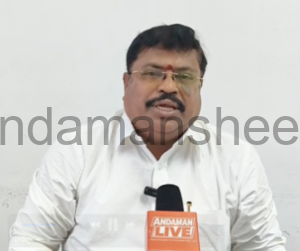
Sri Vijaya Puram, Nov 13: Social Worker Mr. Tamil Selvam of Ward No. 10 of the Sri Vijaya Puram Municipal Council (SVPMC) has expressed concern over the shortage of sanitation workers in the Municipal Council, while appreciating the dedication and efforts of the existing sanitation staff in maintaining cleanliness across the city.
Mr. Selvam pointed out that no fresh recruitment of sanitation workers has taken place since 2013, despite the expansion of municipal wards from 18 to 24 in 2015. He stated that more than 250 posts have fallen vacant due to deaths, retirements and termination of employees, placing an additional burden on the existing workforce.
Appreciating the sanitation wing for its efforts, he also acknowledged the recent recognition received by the Municipal Council under the Swachh Survekshan Awards. However, he said that despite the employees’ commitment, garbage accumulation in several localities, including Aberdeen Bazaar, Middle Point and Shadipur, along with drainage blockages and delays in door-to-door waste collection, continue to pose challenges.
Explaining the reasons behind the situation, Mr. Selvam said that when 600 sanitation worker posts were filled in 2013, the Municipal Council had only 18 wards. Following the addition of six wards in 2015, no corresponding recruitment was undertaken. Instead, the existing workforce was redistributed to cover the expanded municipal area, resulting in an increasing shortage of manpower in almost every ward.
Highlighting the situation in Ward No. 10, he said that four sanitation workers had died, four had retired and two had been terminated over the past four to five years, resulting in a shortage of 10 workers in the ward alone. Meanwhile, the number of households, buildings and residents has continued to increase, leading to a corresponding rise in daily garbage generation.
He further explained that the hilly terrain of Sri Vijaya Puram makes door-to-door waste collection particularly difficult. Sanitation workers often have to climb steep roads and access multi-storey buildings to collect household waste. While a worker can reasonably manage waste collection from around 100 households, many are presently required to cover 200 to 250 households each, placing considerable physical strain on them.
Mr. Selvam also expressed concern over the increasing age and declining physical capacity of the existing workforce, stating that many sanitation workers are now above 50 to 55 years of age. He pointed out that several workers are suffering from serious health complications, including paralysis and cancer, which he attributed to years of working in unhygienic drains and other difficult conditions.
As a solution, he proposed that the Municipal Council constitute a Medical Board to assess the physical fitness and working capacity of sanitation employees across all wards. Workers found medically unfit to continue their duties should be offered a Voluntary Retirement Scheme (VRS), with their eligible retirement benefits calculated and disbursed in a suitable manner.
He suggested that the scheme could be implemented in phases, with around 50 employees being offered voluntary retirement each year, depending on the number of workers willing and medically eligible to opt for it. This, he said, would gradually create vacancies for fresh recruitment without placing an excessive financial burden on the administration at one time.
Fresh recruitment would not only provide employment opportunities to local youths but also strengthen the sanitation workforce and improve the overall cleanliness of the city.
He stressed that vacancies arising from deaths, retirements, terminations and medical disabilities must be filled without further delay. A combination of fresh recruitment and a phased voluntary retirement scheme could help rebuild the sanitation wing with a younger and more efficient workforce.
Appreciating the work of the existing sanitation employees, Mr. Selvam clarified that his concern was not directed against the workers, who were performing their duties to the best of their abilities despite severe manpower constraints. He said that strengthening the workforce was essential to achieve further improvements in sanitation standards and fulfil the expectations of a Smart City.
He also appreciated the proactive approach of the Lieutenant Governor, Dr. Dinesh Sharma, stating that the public had developed considerable confidence in his administration due to his visits to different areas, interactions with residents and efforts to understand the functioning of various departments. He particularly welcomed the introduction of the public hearing programme, which he said had provided people with an opportunity to directly present their grievances.
Through the media, Mr. Selvam appealed to the Lieutenant Governor to intervene in the matter and direct the concerned authorities, including the Municipal Council Secretary, Chairperson and officials of the Urban Development Department, to take an early decision on the shortage of sanitation workers.
He expressed hope that timely intervention and necessary administrative decisions would help strengthen the Municipal Council’s sanitation wing, improve waste collection and drainage maintenance, and ensure a cleaner and healthier Sri Vijaya Puram.


