
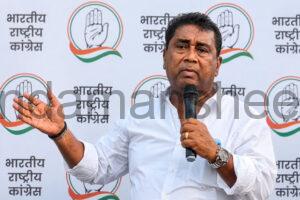
Sri Vijaya Puram, Sept. 30: The Andaman and Nicobar Territorial Congress Committee (ANTCC) has raised a series of concerns regarding the functioning of the medical department and healthcare infrastructure in the Andaman and Nicobar Islands, seeking urgent intervention to address issues ranging from shortages of doctors and technical staff to inadequate surgical facilities, procurement of medicines and the non-availability of critical diagnostic services at G.B. Pant Hospital.
The issues were raised in a memorandum submitted by Mr. G. Bhaskar, Chairman, Campaign Committee, ANTCC, to the Lieutenant Governor of the Andaman and Nicobar Islands on September 30. In the memorandum, Bhaskar thanked the Lieutenant Governor for visiting G.B. Pant Hospital and stated that several issues requiring attention had been identified with the objective of improving healthcare delivery in the Islands.
One of the major concerns raised in the memorandum relates to the functioning of the Andaman and Nicobar Islands Institute of Medical Sciences (ANIIMS) and the Directorate of Health Services (DHS). Mr. Bhaskar stated that the two institutions were not functioning in coordination with each other and that issues within the organisational structure were affecting healthcare delivery. He suggested that DHS could be shifted to the Garacharma District Hospital and that the district hospital could be made fully functional to cater to ordinary diseases, while specialist services such as neurology, nephrology and orthopaedics could be handled at G.B. Pant Hospital under ANIIMS.
The memorandum also called for the establishment of a dedicated surgical block with trauma care and intensive care facilities. It stated that G.B. Pant Hospital currently has three operation theatres, with one dedicated to ophthalmology while the remaining theatres are shared by ENT, orthopaedics, general surgery and other departments. According to the memorandum, this arrangement results in patients having to wait for long periods for surgery. It further requested that a new dedicated surgical block with a minimum of 10 operation theatres be developed along with permanent paramedics, sisters and OT technicians. The memorandum also pointed to a shortage of technical staff required to operate the theatres.
The ANTCC memorandum further raised concerns over the availability of doctors on contractual appointments. It called for measures to appoint doctors to permanent posts, stating that uncertainty over contract renewals affects continuity. It also highlighted the difficulty of attracting doctors and other medical and technical personnel to the Islands, citing contractual appointments, salary structures and workload among the concerns mentioned in the memorandum.
Another major issue raised was the procurement of medicines and medical equipment through the Government e-Marketplace (GeM). Mr. Bhaskar alleged that the present procurement system was resulting in the supply of substandard or low-quality materials and called for an alternative procurement mechanism through reputed companies. The memorandum specifically raised concerns over surgical equipment and orthopaedic implants and referred to an alleged incident involving infected hernia-operation gauges supplied through GeM, claiming that patients subsequently required further treatment. These allegations were presented in the memorandum as grounds for reviewing the existing procurement system.
The memorandum also drew attention to pending payments to local medicine suppliers. It stated that substantial amounts were allegedly pending for long periods, affecting the ability of local suppliers to continue supplying medicines and other essential medical items to hospitals. The ANTCC requested that pending dues of local medicine suppliers be cleared at the earliest.
The memorandum further proposed the establishment of an AIIMS-like institution in the Andaman and Nicobar Islands. According to the document, such an institution would benefit patients who are currently referred to mainland hospitals under the Ayushman Bharat scheme and could also support the developing defence infrastructure in the Islands.
Issues faced by patients under the Ayushman Bharat scheme were also highlighted. The memorandum stated that the existing financial assistance of Rs. 5 lakh may be insufficient for patients requiring prolonged and expensive treatment, including cancer care, and sought enhancement of the amount for certain diseases. It also raised concerns regarding air-ticket reimbursement, stating that patients and attendants are required to arrange and initially bear the cost of travel before reimbursement, which it said creates financial difficulties for patients.
The memorandum also referred to the cost of airlifting stretcher-bound patients along with medical teams and oxygen support, stating that the expense could reach around Rs. 4–5 lakh. It questioned how economically disadvantaged patients could arrange such an amount in advance.
The non-availability of MRI, PET scan and radiation facilities at G.B. Pant Hospital was another major concern raised in the memorandum. It stated that the absence of an MRI facility forces patients to seek diagnostic services at private hospitals, increasing their financial burden. It also pointed out that cancer cases had increased in the Islands in recent years and sought immediate attention to the absence of PET scan and radiation facilities.
Concluding the memorandum, Mr. Bhaskar requested the Lieutenant Governor to intervene in the issues raised and take necessary steps to strengthen healthcare infrastructure and services across the Andaman and Nicobar Islands.


