Nishar Mohammed
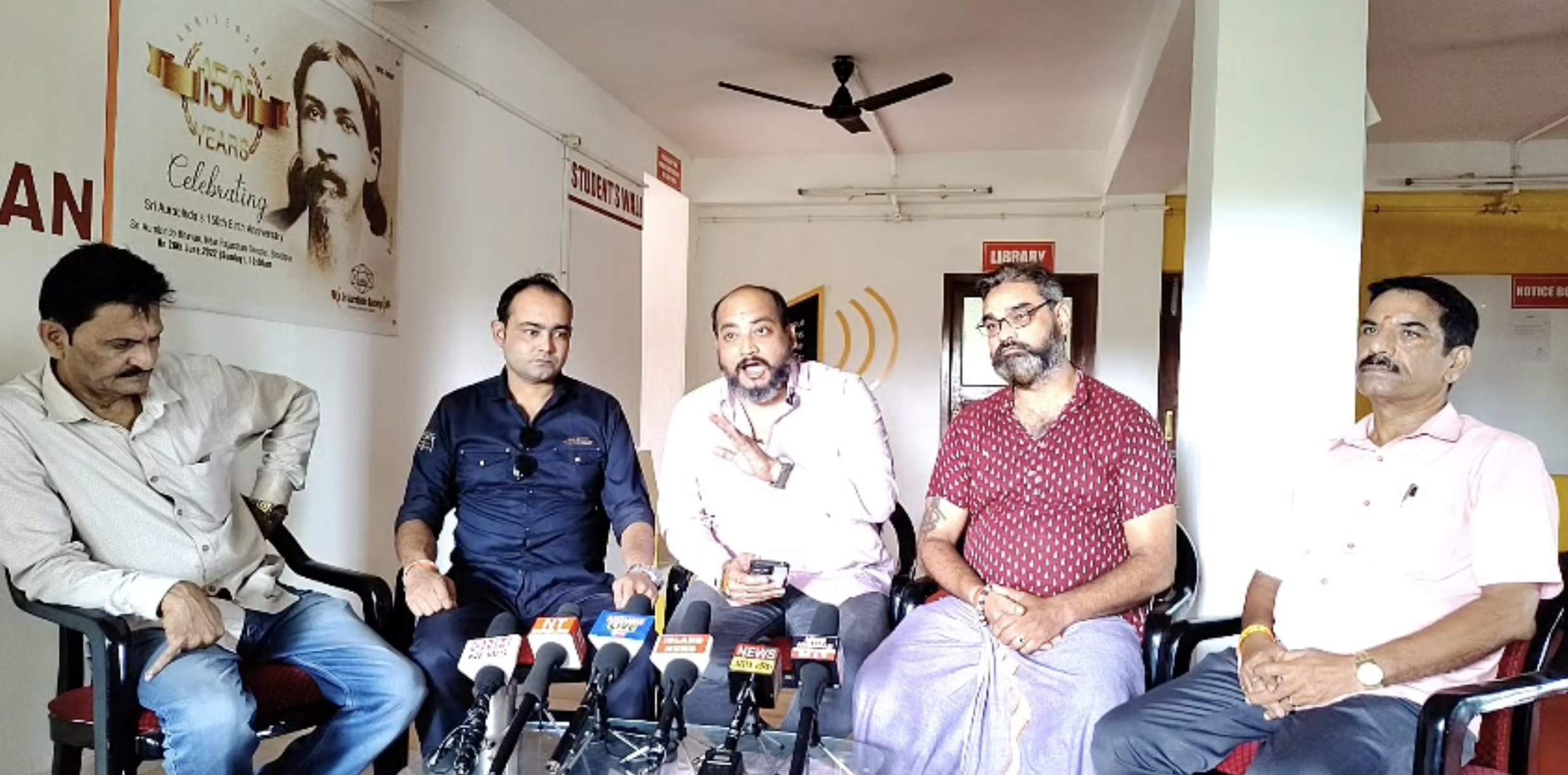
Sri Vijaya Puram, July 24: In a detailed press conference held in Sri Vijaya Puram, members of Hindu Rastriya Shakti (HRS) raised serious concerns over deteriorating healthcare facilities, dysfunctional public utilities, and unaddressed infrastructure issues in the Andaman and Nicobar Islands.
The session began with a strong appeal for urgent improvement in medical infrastructure, particularly at G.B. Pant Hospital. Mr. Anshuman Roy, Youth President of HRS youth wing demanded MRI, ECG, and CT scan facilities for all hospitals across Andaman and Nicobar Islands. He said that absence of such facilities and trained technicians continue to compromise patient care—especially for trauma and accident cases. He urged the administration to ensure that these diagnostic facilities are functional around the clock, not only in Port Blair but across district hospitals up to Diglipur.
Concerns were also raised about the long waiting hours in OPD registration queues at G.B. Pant Hospital. It was suggested that the administration actively promote the usage of the existing “ABHA” mobile application and QR-based registration systems, ensuring widespread awareness and accessibility, particularly for rural and inter-island patients who struggle after arduous journeys to the capital.
Attention then turned to the poor condition of the crematorium at Junglighat. Pujari Vidyasagar Dubey highlighted multiple issues including lack of clean water, proper seating, broken wooden platforms, and frequent interference by stray animals. He appealed to the concerned department to immediately address these shortcomings, emphasizing the sanctity of the last rites.
The long-pending construction of the Asthi Visarjan Ghat in the Carbyn’s Cove area was also criticized. Initiated under the previous Chief Secretary’s tenure, the project remains incomplete even after two years. Speakers pointed out that due to the lack of this facility, many Hindu families are forced to travel to the mainland for rituals, bearing high financial burdens.
Human Rights and Health volunteer Mr. Sanjay Kumar drew attention to two long-term unidentified patients—Mr. Ahmed and Mr. Raja Rao—languishing at G.B. Pant Hospital. Despite having no family or social support, they remain bedridden for 16 and 45 months respectively. Mr. Sanjay Kumar appreciated the hospital staff and local philanthropists for supporting their care but urged the administration to find long-term shelter solutions for such destitute patients, possibly at government-run homes.
Mr. N. Venkata Ramanna, Vice President of HRS, highlighted the chaotic state of electricity services. He reported frequent power cuts lasting up to 9 hours a day, erratic billing systems, and unresponsive field offices. He alleged that despite having swipe machines, staff at power offices refuse digital payments and demand cash. Mr. Ramanna called for the reinstatement of functional generators and strict adherence to public service timings at billing counters.
He also raised the issue of irregular water supply, noting that despite year-round rainfall in Sri Vijaya Puram, residents receive water only on alternate days—a situation unchanged for decades. He strongly criticized the lack of long-term solutions from successive officials and engineers.
Road safety was another pressing concern. Speakers demanded the installation of speed breakers and traffic monitoring systems in the Dolygunj area, where a recent accident involving a school van underscored the urgent need for regulation near crowded junctions and educational institutions.
Concluding the press meet, representatives urged the administration to take public complaints seriously, communicate solutions transparently, and utilize media platforms to inform citizens about existing facilities and services. “If the departments are truly making improvements, let the public know. Promote what’s working, and fix what’s broken,” Mr. Anshuman Roy emphasized.


