
T. Sujatha, D. Bhattacharya, Arun Kumar De, Perumal P., Jai Sunder, P.A. Bala and R.R. Alyethodi, Animal Science Division, ICAR-CIARI, Port Blair
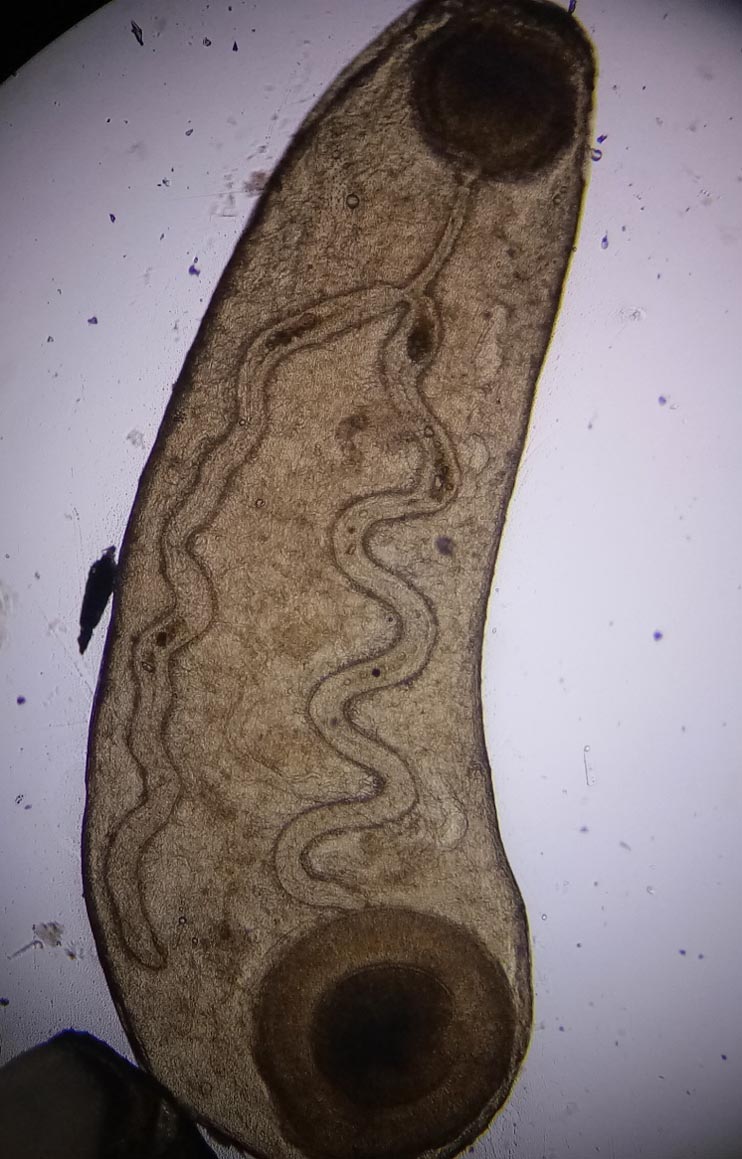
Port Blair, Oct 27: Outbreak of immature amphistomiasis in goats has not been reported so far from Andaman & Nicobar Islands on the basis of isolation of causative agents. Although previous reports suggest the occurrence of mature amphistomiasis based on presence of eggs in faecal sample but presence of eggs may be considered as a biomarker for delineating amphistomiasis affected area but is not suitable for detecting the clinical cases of the disease, since immature flukes are only capable of producing the disease which do not lay eggs. We, therefore, report first time an outbreak of immature amphistomiasis along with its aetiological agent in an organized goat farm situated in Mithakhari of South Andaman District during September, 2021. The animals were reared in semi intensive system since they were regularly allowed to graze in the nearby water logged marshy land since the climate was wet throughout this month. From the middle of the month, the farmer reported mortality of the goats (average 2-3 per day) showing the symptoms of abdominal pain, bloat/distension of abdomen, abnormal accumulation of clear oedema fluid under the skin of the lower jaw (bottle jaw), profuse watery diarrhoea followed by death. Within 14 days, the mortality reached to 38.46%. After visiting the place of outbreak post-mortem examination of the goats was done. Examination of abdomen revealed accumulation of colourless fluid in the peritoneal cavity and there was distension of gall bladder. After opening the intestine, in the duodenum region numerous immature flukes could be detected along with patches of haemorrhages as they were embedded in the mucosa and are reported to be plug feeders by drawing pieces of mucosa in the suckers. In the abomasum there were ulcerative changes along with presence of few numbers of fluke. Ultimately numerous worms were isolated from rumen of the affected animal (Fig. 1). On the basis of colour and microscopic examination the worms were indistinguishable from Paramphistomumcervi (Fig. 2). Based on the post-mortem findings and clinical symptoms, the farmer was advised to start with treatment against amphistomiasis by using single dose of oxyclonazide along with supportive iron therapy for consecutive five days and further advised to be stall fed. After onset of the therapy only three severely affected animals died within two days and after five days no mortality was observed. Hence, we recommend treatment of the goats with flukicidal medicines before the onset of rainy season available in different combinations with other anthelmintics like: rafoxanide + ivermectin or combinations of levamisole hydrochloride, oxyclonazide, anhydrous copper sulphate and cobalt sulphate or closantel sodium dehydrate under supervision of qualified veterinary practitioner.


