N. Francis Xavier
Part XXV, (Continued from last week)
Hemraj woke up before the break of dawn. He could not sleep well that night. The mosquitoes and sand flies attacked in swarms. “When can I sleep in a comfortable bed again?” he wondered.
The men were curled up in the sand and fast asleep. Hemraj walked to the other side of the camp to complete his ablutions. The sea was a dead calm. The pink glow of dawn was slowly spreading on the horizon. He waited for the sun to come up, a fiery red ball. He performed the prayers to the Sun god, asking for blessings on the final leg of the long odyssey. He made libations of sea water to all the gods to stand by him and see him safely home.
The hazards of the sea are unpredictable. One never knows when a squall can come without warning. Their frail boat has already taken a lot of punishment. But he had faith in its sturdy planks and keel.
“OK boys, get up, let’s check the traps.” he shouted to the men.
After a breakfast of rice and water the men went out to check the snares and lines they had set during the night. They did not dare use the rifle for hunting. Sounds carry long distance over the sea.
By noon the hunting party returned with two fat pigs. A giant barracuda was caught on one of the lines. Soon the aroma of roasting rose over the camp. With sharpened appetites the men sat to eat.
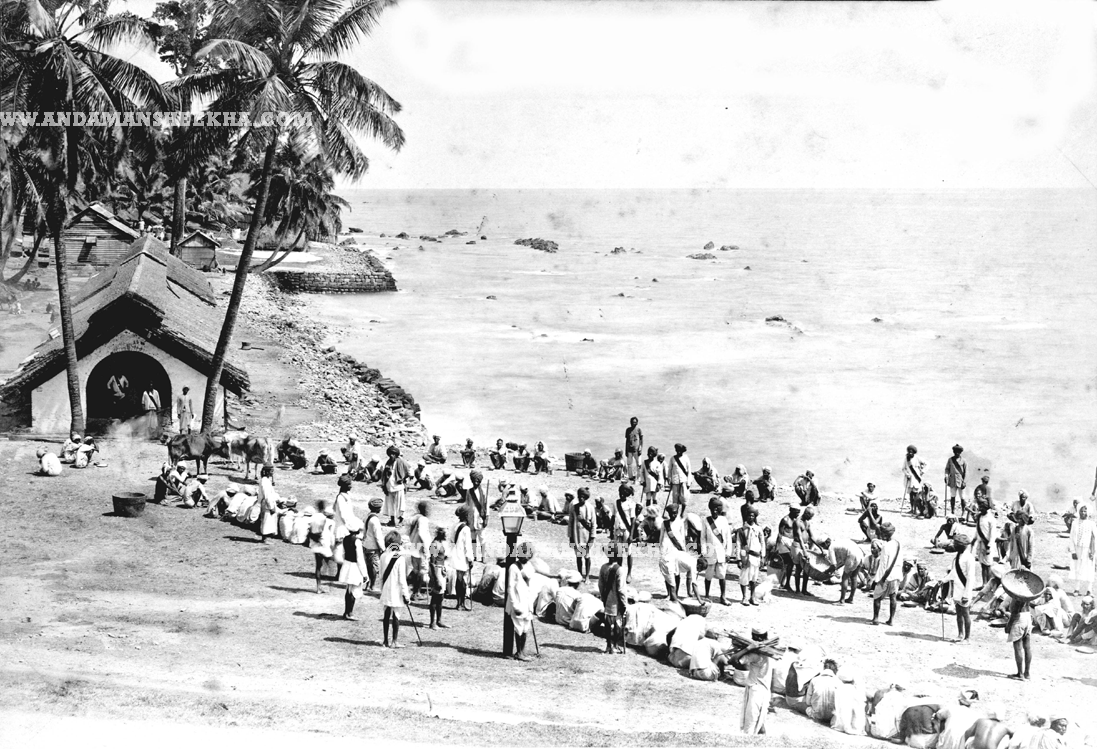
How different from eating food on Ross! There they were made to squat in rows in the open near the kitchen. Those of the untouchable caste were made to sit separately. The Jemadarsthrew half-baked rotis into their rusty plates and poured watery lentil soup over them. There was never enough to fill the stomach.
Self-supporters had a better time. They could cook their own food, supplemented by an occasional fish or chicken. Some used birdlime to trap pigeons.
Here they sat around their food, irrespective of caste or creed and shared whatever nature offered them.
After a hearty meal all heads turned towards Bhaman.
“Let’s hear the rest of the story Bhaman; what happened to Gordon?” they asked.
Bhaman lay sprawled in the glistening white sand, a driftwood log for a pillow. He started his narrative.
“After the fall of Delhi we retreated towards Mathura. There were about 30,000 sepoys. Gordon was appointed our Commander by Bakht Khan and Feroze Shah. The Raja of Surajpore also joined us. We were sheltered by Raja Narpat Singh in Ruiya Fort, situated in thick jungles and surrounded by a ditch full of thorn bushes. Gordon quickly set up the defences, placing the guns and snipers at vantage points inside the fort.
“We heard the English were advancing with a huge army under the command of Brigadier Adrian Hope. It was the 15th April 1858. There were 93rdHighlanders and Sikhs with him. Gordon told us to hold our fire till they were real close. We all marked our men. When Gordon saab ordered fire the entire frontline of the English fell. They were forced to take shelter behind the trees.
“Adrian Hope was a seasoned soldier. He planned to blow up the gates of the fort using bags of gunpowder. The engineers were entrusted the job of advancing towards the gates under heavy covering fire, plant the bags, light the fuses and run back.
“If the gates are blown up we will not be able to stop the rush of the Sikhs. There was only one way to stop them…to kill Adrian Hope.
“Gordon saab quickly climbed a tree with his rifle. He started taunting the British to come into the open and fight.
“In unmistakable barrack room English, he shouted at them, ‘Come on, you *** Highlanders! Come on Scotty! you have a harder nut to crack than eating oatmeal porridge. If you can come though these bamboos we’ll warm your *** for you, if you come in here!’.
“Brigadier Hope peeped from behind a tree to see who it was. The next moment he was shot, right through the heart. Gordon claimed another victim.
“With the death of Hope the British panicked. They retreated into a mango orchard for the night, to bury and cremate their dead. They suffered their heaviest casualties for any single day during the mutiny.
“That night we quickly slipped outthrough the secret tunnels in the fort and disappeared into the jungles. When the British entered the fort the next day it was empty.
“After that Gordon led us from one fort to another throughout the summer of 1858, as the British doggedly followed us. Finally, when Bakht Khan was killed at the decisive battle at Nawabgunj we all scattered.
“The mutiny was coming to a close. Most of the leaders were caught and hanged. The Queen of the English announced a general amnesty to all those who wished to surrender. Many rebels wanted to lay down their arms. ‘Don’t do that. You’ll all be hanged like dogs or sent in chains to Kala Paani’, Gordon told them. But they wouldn’t listen.
“Most surrendered their arms, collected the two rupees and a discharge certificate and returned to their villages. When the Gordon saw them go, he sat down and wept, saying he had neither a home nor a country to return to.
“ I too decided not to surrender. We started moving towards the Nepal border. We were told that Begum HazratMahal and Nana Saheb were already there, granted asylum by Jung Bahadur after they paid a huge ransom.
“I was arrested just before I could cross the border, and transported to Andamans. I don’t know what happened to Gordon.” Bhaman stopped.
“Let’s hope we meet him somewhere…if he’s still alive”, Hemraj said, as they started work on the boat. A big load of coconuts picked up from the trees on the island have to be loaded, the water casks filled up from the stream, the sails to be repaired. They have a long sail ahead of them. (To be continued…)

