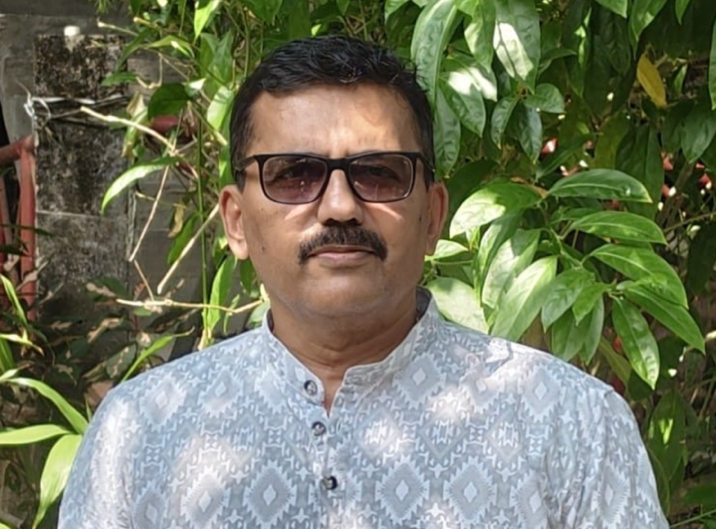
Sanjay Balan
There is a systemic flaw in the governance structure of the Andaman and Nicobar Islands. It has existed for long, but in recent years it has become far more visible. The reason is not difficult to understand. The Islands have slowly produced a new category of local leadership — visible during elections, active around contracts, present at functions, but mostly absent when real public issues have to be taken up with authority.
This is not merely a criticism of individuals. It is a criticism of the way the local governance structure has been allowed to weaken over the years.
In a Union Territory like Andaman and Nicobar Islands, the governance model is different from a full-fledged State. We do not have an elected State Government. We do not have MLAs, Ministers or a Legislative Assembly. The territory is directly under the control of the Union Government, represented through the Lieutenant Governor and the Administration. Therefore, the few democratic institutions and political channels available here become even more important.
But unfortunately, the opposite has happened.
Local bodies, which should have been the first real platform of people’s participation, have been reduced largely to ornamental institutions. Councillors, Panchayat members, Pradhans and other local body representatives may hold elected posts, but their actual say in decision-making has become limited. Powers have been slowly taken away, or never properly transferred in the first place. Funds, functions and functionaries remain under tight administrative control. The result is that local representatives are left with responsibility in public eyes, but without enough authority in official files.
Naturally, this kind of system does not produce strong public leaders. It produces intermediaries.
When elected local representatives are not empowered to solve issues, many of them stop behaving like representatives and start behaving like recommenders, brokers or local managers. Politics then becomes less about public policy and more about access — access to officers, access to contracts, access to small favours, access to functions, access to photo opportunities.
This is how shallow leadership grows.
The bigger concern is that local political leaders today hardly appear to have any serious role in shaping the decision-making of the territory. In earlier times, whether one agreed with them or not, local leaders of the party ruling at the Centre had some role in carrying the concerns of the Islands to Delhi. They acted as a bridge between the public and the higher political leadership. That bridge today appears extremely weak.
The present thinking among many local leaders of the ruling party is even more amusing. They seem to believe that raising a genuine public issue before the Government may amount to anti-party activity. This is a very strange understanding of politics.
If there is water scarcity, should a local leader remain silent because his party is in power? If land records are not being corrected, should he look away? If airfare becomes unbearable, should he clap from the sidelines? If local bodies are being weakened, should he pretend everything is fine? If ordinary citizens are running from office to office, should he only attend official programmes and post photographs?
This is not loyalty. This is political laziness wearing the mask of discipline.
A ruling party leader’s duty is not to defend every administrative failure. His duty is to ensure that the Government gets the correct feedback before public anger builds up. Opposition parties will naturally raise issues. That is their role. But solutions usually come faster when leaders who have access to the ruling establishment take those issues upward and make the Government act.
In a place like Andaman, this role is even more important. Delhi cannot understand every local issue on its own. The Islands are far away. Our problems are different. Water, land, transport, shipping, airfare, education, health, local employment, revenue records, forest issues, tribal areas, tourism, disaster vulnerability — these are not matters that can be understood only through departmental reports. They require political feedback from the ground.
Today, except for the Member of Parliament, hardly any local leader appears to be consistently playing that role. That is one of the biggest stumbling blocks in effective governance in the territory.
The office of the Lieutenant Governor also deserves serious reflection. In a Union Territory, the LG’s office should be seen as a constitutional bridge between the people and the Administration. It should inspire confidence that there is an independent authority listening to the people above departmental routine. But unfortunately, public perception has changed. The LG’s office is now increasingly viewed as an extension of the Administration itself.
That perception is damaging.
Even if good work is being done in some areas, governance cannot survive only on internal file movement. Public confidence matters. People must feel that someone is listening beyond the department which caused the problem in the first place. If the Administration rejects, delays or ignores, and the higher office is also seen as part of the same administrative wall, then the citizen is left with only three choices — agitation, litigation or silence.
None of these is healthy governance.
This is why small issues in the Islands often become big issues. Matters that should be resolved at the Tehsildar, Secretary or local body level keep dragging on. Citizens are forced to approach the MP, the media, the courts or Delhi. This is not because every issue is complicated. It is because the normal political feedback system has weakened.
A healthy governance structure needs multiple pressure points. In a State, an MLA can raise an issue. A Minister can intervene. An Assembly committee can question officials. Local bodies can assert themselves. Party organisations can carry complaints upward. Media can amplify. Civil society can participate.
In Andaman, most of these pressure points are either absent, weak or dependent on the Administration itself. That leaves too much power concentrated in files and too little power in public representation.
This is the real problem.
We have administration without sufficient political accountability. We have local bodies without sufficient authority. We have elected local leaders without sufficient courage. We have ruling party functionaries who often mistake silence for loyalty. And we have citizens who are expected to be patient while basic issues remain pending for months and years.
The answer is not merely to blame officers. Officers will always function within the system given to them. The answer is to restore the democratic voice within the Union Territory structure.
Local bodies must be genuinely empowered. Their powers, funds and responsibilities must be clearly defined and protected. Local representatives must not be reduced to ceremonial participants in a system controlled entirely from above. Political parties must train and encourage their local leaders to raise public issues responsibly, not punish them for speaking truth to power. The ruling party’s local organisation must understand that carrying people’s grievances to Delhi is not anti-party activity; it is the most useful service it can perform for both the people and the Government.
The LG’s office too must consciously rebuild public trust. It must be seen not merely as the administrative head of the territory, but as a responsive institution open to the concerns of citizens, elected representatives and local bodies.
Andaman does not need more ornamental politics. It needs a serious political feedback system.
A Union Territory cannot be governed effectively by files alone. It needs listening posts. It needs local courage. It needs empowered institutions. It needs leaders who do not confuse public silence with public satisfaction.
Today, the Islands’ biggest governance crisis is not the absence of schemes or slogans. It is the absence of effective local political voice.
And unless that voice is restored, governance in Andaman will remain exactly what people increasingly feel it has become — distant, officer-centric, slow, and disconnected from the ground.
(The writer Mr. Sanjay Balan, though retired from government service, he continues to blend governance insight, land-law expertise, and candid public commentary in service of Island development) (Note: Views expressed in this column are writer’s own)

