Nishar Mohammed
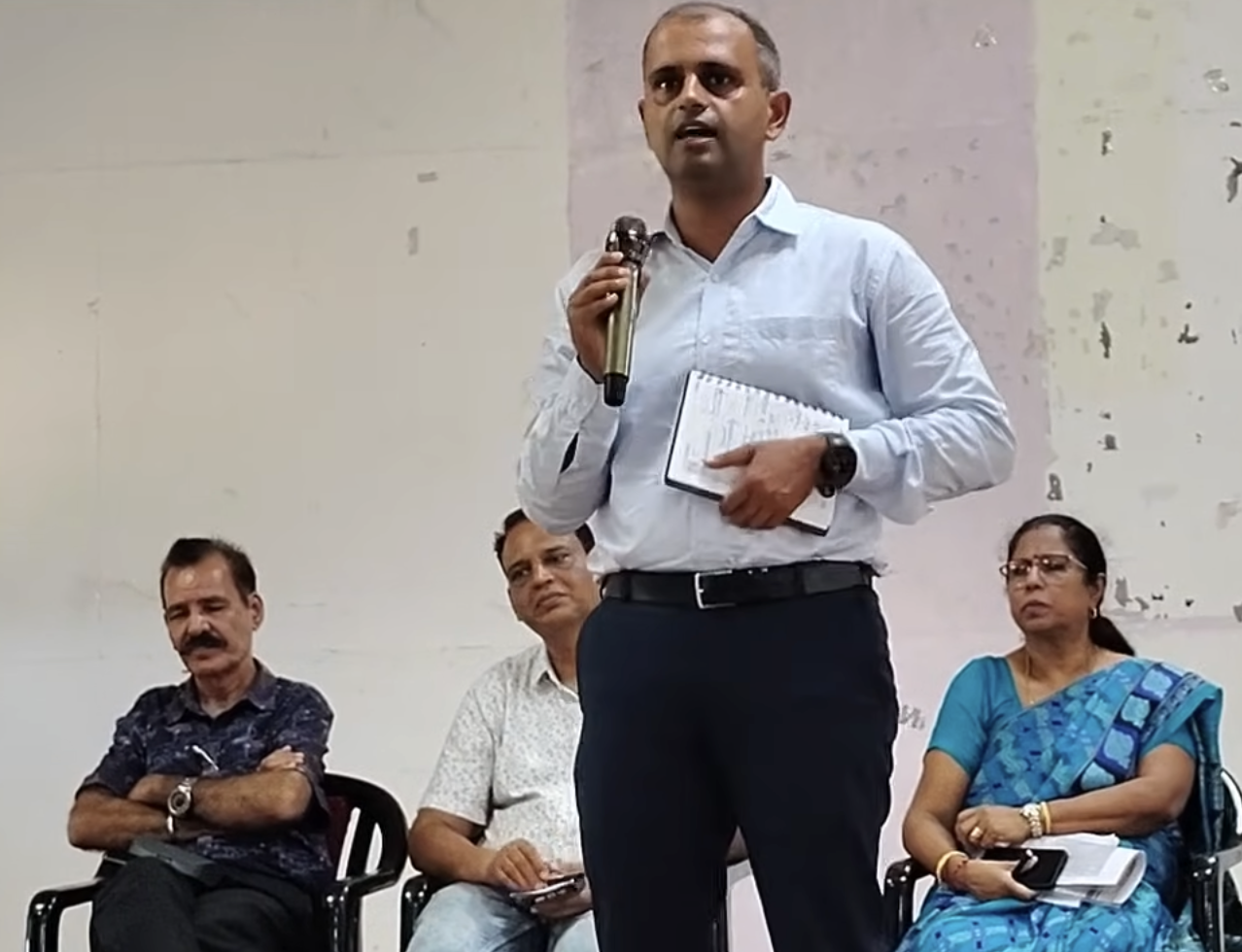
Sri Vijaya Puram, Feb. 11: In the backdrop of the ongoing student agitation against the proposed Deemed-to-be University in the Andaman & Nicobar Islands, the Director of Education, Andaman & Nicobar Administration, Mr. Vikram Singh today addressed a large gathering of students at the TGCE Auditorium in an effort to clarify doubts and respond to mounting concerns regarding the transition from Puducherry University affiliation to the newly formed Deemed University.
The interaction, witnessed intense exchanges between the administration and the protesting students. While the Director attempted to explain the rationale, legal framework, and long-term benefits of the move, the meeting ultimately ended without a resolution as many students expressed dissatisfaction with the explanations provided.
At the outset, the Director appealed for calm and requested students to listen patiently before reacting. He emphasized that the proposed Deemed University is not a private institution, but a government-run university funded directly by the Government of India through the Ministry of Education. According to him, the decision to establish the Deemed University was taken at the national level and communicated to the Union Territory administration for implementation, rather than being a unilateral local decision.
Explaining the structure, the Director stated that the existing seven constituent colleges would continue to function in their present buildings and infrastructure would not be removed but rather strengthened. He highlighted that more permanent faculty members recruited through UPSC are being inducted and additional recruitment is planned in the coming academic years. He also compared the model to large central universities such as Delhi University, where multiple colleges operate under a single administrative umbrella without requiring a single centralized campus.
Addressing concerns over infrastructure, the Director informed students that a new administrative building under construction in the Manglutan area would primarily house offices such as the Vice-Chancellor, Registrar, Finance and Legal sections, along with new “innovative schools” aimed at introducing industry-oriented courses. He argued that flexibility in curriculum design under a Deemed University would allow quicker adaptation to industry demands, particularly in sectors relevant to the Islands such as tourism, fisheries, marine studies and allied skills, thereby improving employability.
On the issue of fees, which has been one of the major points of anxiety among students, the Director assured that the fee structure would remain nominal and unchanged. He reiterated that government universities function primarily on public funding rather than student fees and that affidavits had already been issued by the administration stating that there would be no sudden increase in tuition charges. He also clarified that reservation policies, examination systems, and degree recognition would continue under existing government norms.
The Director further stated that Puducherry University had issued a No Objection Certificate for the transition and that, for a smooth shift, examination support would continue temporarily. He stressed that the long-term vision behind the move was to elevate the educational status of the Islands, attract larger funding, and eventually pave the way toward a Central University status after a few years.
A significant portion of his speech focused on employment and skill development. He noted that the transformation aimed to align academic curricula with local industries such as tourism, fisheries, marine services, and emerging scientific fields, thereby improving employability among graduates. He highlighted that increased funding—reportedly running into thousands of crores over time—would help upgrade laboratories, recruit permanent faculty through UPSC processes, and introduce new professional and skill-based courses. He also mentioned that several national-level institutions were being considered as mentor institutes for the island colleges to enhance academic quality and accreditation ratings.
Despite the detailed presentation, many students remained unconvinced. Several participants raised questions regarding the value of their degrees, fear of reduced national recognition, uncertainty about accreditation rankings, and lack of prior consultation during their admission process. Some students also voiced apprehension that the transition mid-course could affect their academic stability and career prospects.
As the session progressed, visible restlessness grew among sections of the audience, and repeated interruptions underscored the prevailing mistrust. By the conclusion of the meeting, it became evident that the administration’s clarifications had not fully addressed the emotional and academic concerns of the protesting students.


