Sanjay Balan
The debate over the proposed Deemed University in the Andaman & Nicobar Islands has moved from policy files to the streets. Students across the Islands are protesting, parents are anxious and the wider community is asking a simple but important question: what kind of university system will truly serve the long-term interests of the Islands?
Let us begin with a simple clarification. Nobody in the Islands is opposed to the idea of a university. In fact, the demand for a university here is decades old. For generations, students from these Islands have had to leave home to pursue higher education on the mainland. The aspiration to build a strong university system here is therefore both legitimate and long overdue.
But the real question before us is not whether we should have a university. The real question is what institutional model will actually work in the unique conditions of the Andaman & Nicobar Islands.
The present proposal is to create a De-Novo Deemed University by bringing several existing Government colleges under a newly created institutional structure. On paper this may appear administratively convenient. In reality, however, it raises serious questions.
Across India, most Deemed Universities evolved from institutions that had already built strong academic reputations over decades. They had established faculty strength, research culture and academic networks. Deemed status came after institutional maturity, not before it.
What is being attempted in the Islands is the reverse — creating a university structure first and hoping the academic ecosystem will gradually emerge around it. That is a difficult experiment anywhere. In a geographically isolated territory like the Andaman & Nicobar Islands, it becomes even more uncertain.
The Islands face challenges that mainland universities rarely confront. Attracting senior faculty has always been difficult. Academic networks are limited. Research ecosystems take time to develop. A university here therefore needs an especially strong institutional foundation if it is to succeed.
Governance is another issue that cannot be ignored. The Andaman & Nicobar Islands function under a Union Territory administration without a legislative assembly. In such a system many public institutions operate through administrative or society-based frameworks. While such models may work for schemes or development projects, universities are not administrative projects. They are academic institutions that must operate with long-term autonomy, credibility and institutional continuity.
Islanders have already seen how society-mode institutions function in practice. Institutions such as ANIIMS and SOVTECH were created with good intentions and substantial resources. Yet their evolution has also revealed the limitations of such governance structures in a small administrative ecosystem. Staffing shortages, administrative dependence and institutional uncertainty have frequently overshadowed their potential.
Islanders are also mindful of recent institutional experiences. The prolonged uncertainty surrounding DBRAIT’s affiliation and infrastructure compliance left hundreds of engineering students in academic limbo for years. For students and parents, this was not an abstract policy failure but a deeply personal one. It demonstrated how fragile higher education institutions can become when governance structures are unclear and accountability is diffused. When a new university model is now proposed under a similar administrative ecosystem, it is only natural that students ask whether the Islands can afford another such experiment.
Another important issue is academic credibility. A Central University established through an Act of Parliament immediately carries national recognition and institutional legitimacy. A newly created De-Novo Deemed University, on the other hand, takes years to build comparable reputation, faculty strength and research networks.
For students from the Islands — many of whom will eventually compete in national job markets or pursue higher education on the mainland — this distinction matters greatly.
It is also important to remember that the Administration itself has clarified that students currently studying in Government colleges will continue under Pondicherry University affiliation and receive their degrees accordingly. In other words, there is no immediate academic crisis requiring hurried institutional restructuring.
The point is not to question the announcement made in 2018. Announcements reflect intent; institutional design determines success. When stakeholders raise legitimate concerns about the model, it is not defiance — it is responsible participation in shaping a better institution for the Islands.
The present unrest among students did not arise overnight. It reflects a deeper anxiety about the institutional future of higher education in the Islands. When institutions that will shape the future of generations are redesigned, consultation is not a procedural formality — it is a democratic necessity.
The Andaman & Nicobar Islands are not just another district in the country. They occupy a unique place in India’s geography, ecology and strategic vision. The university created here should ideally grow into a centre of excellence in areas such as marine sciences, island ecology, coastal sustainability, disaster management and maritime studies.
For that to happen, the institutional foundation must inspire confidence — among students, faculty and the wider academic community.
This is why many stakeholders believe that a Central University model may offer a stronger and more durable framework for the Islands. Central Universities are backed by parliamentary legislation, integrated into national academic networks and supported by stable funding structures. They also have greater ability to attract faculty and build research ecosystems over time.
Universities are not short-term administrative projects. They shape the intellectual future of regions for generations.
When such a decision is taken for the Andaman & Nicobar Islands, it must be guided not by administrative convenience but by what will inspire lasting confidence among students, faculty and the wider academic community. The young people of these Islands deserve nothing less.
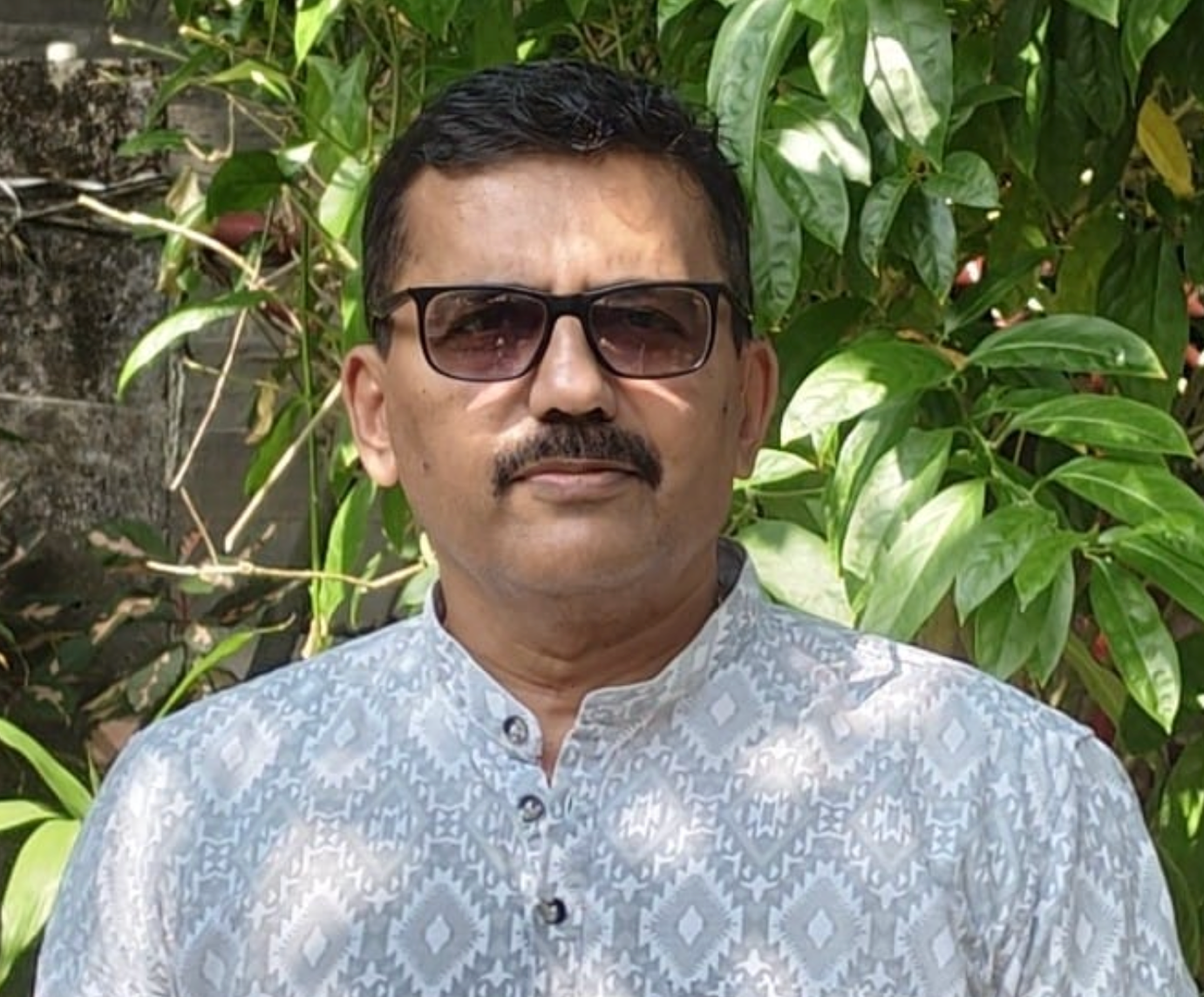
(The writer Mr. Sanjay Balan, though retired from government service, he continues to blend governance insight, land-law expertise, and candid public commentary in service of Island development) (Note: Views expressed in this column are writer’s own)