Vikramaditya
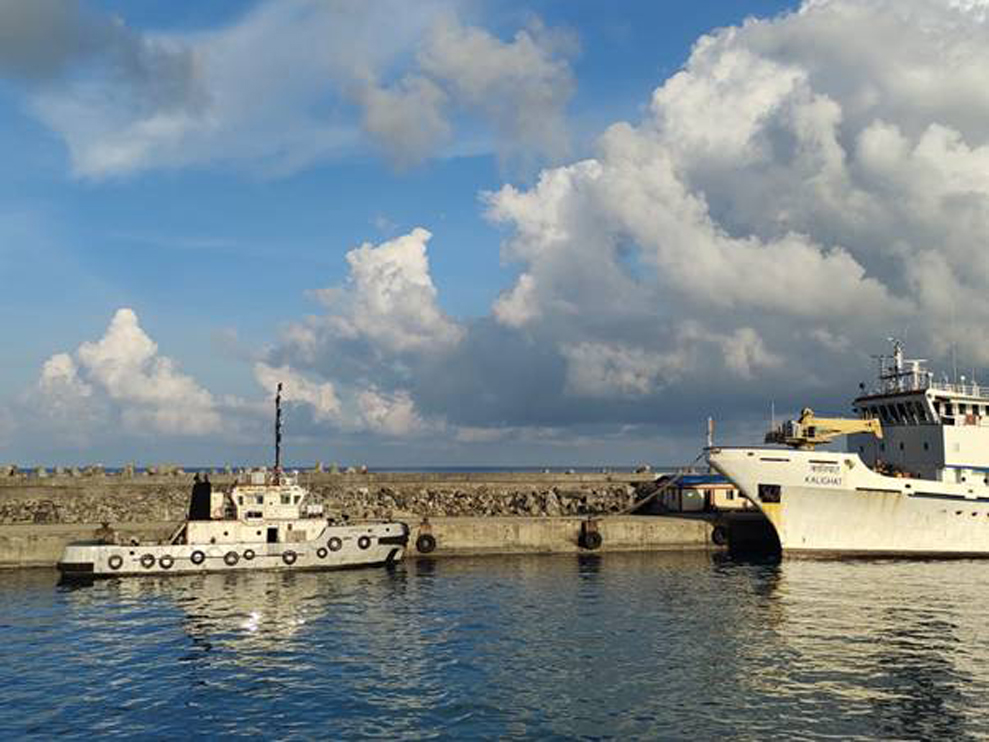
Car Nicobar, Dec. 17: Car Nicobar’s Mus Port, located 150 nautical miles from Sri Vijaya Puram and strategically positioned near the vital 10-degree channel, remains in a state of neglect despite its crucial role for merchant ships, the Navy, and Coast Guard vessels.
This passage is frequently used by ships traveling from the East Coast ports of India to the Malacca Strait, one of the busiest maritime routes in the world. However, the Andaman and Nicobar Administration has failed to provide basic infrastructure and facilities for the port, causing significant concerns for both maritime safety and operations.
Mus Port plays a critical role as a refuge point for ships in distress and serves as a base for Search and Rescue (SAR) operations, which are vital for both merchant vessels and defense forces. Despite its significance, the port suffers from glaring infrastructural deficiencies.
As per sources, one of the primary issues is the lack of fresh water supply for ships calling at the port, as well as the absence of drinking water facilities for passengers who use the port regularly. This not only inconveniences seafarers and travelers but also undermines the port’s ability to function as a reliable maritime hub.
Additionally sources informed that the Mus Port does not have a tug boat to assist ships during docking and undocking operations, which is a major safety concern. Over time, due to a lack of dredging, sediment buildup has further reduced the port’s operational efficiency. Moreover, many bollards, essential for mooring ships, are in broken condition and urgently need replacement.
According to experts, the port also lacks sufficient fenders to protect ships from colliding with and damaging the port infrastructure, putting vessels at risk during berthing operations. Furthermore, the navigation buoys inside the port, critical for guiding ships safely into the harbor, are in broken condition, compromising maritime safety and increasing the risk of accidents.
Given its strategic importance, Mus Port serves as a lifeline for maritime operations, yet it remains woefully neglected. Local stakeholders and maritime experts have repeatedly called for urgent attention to the port’s infrastructure. Immediate measures, including the provision of fresh water facilities, the replacement of broken bollards and buoys, dredging of the port, and the deployment of tug boats, are necessary to ensure the port can meet its potential as a vital maritime hub.